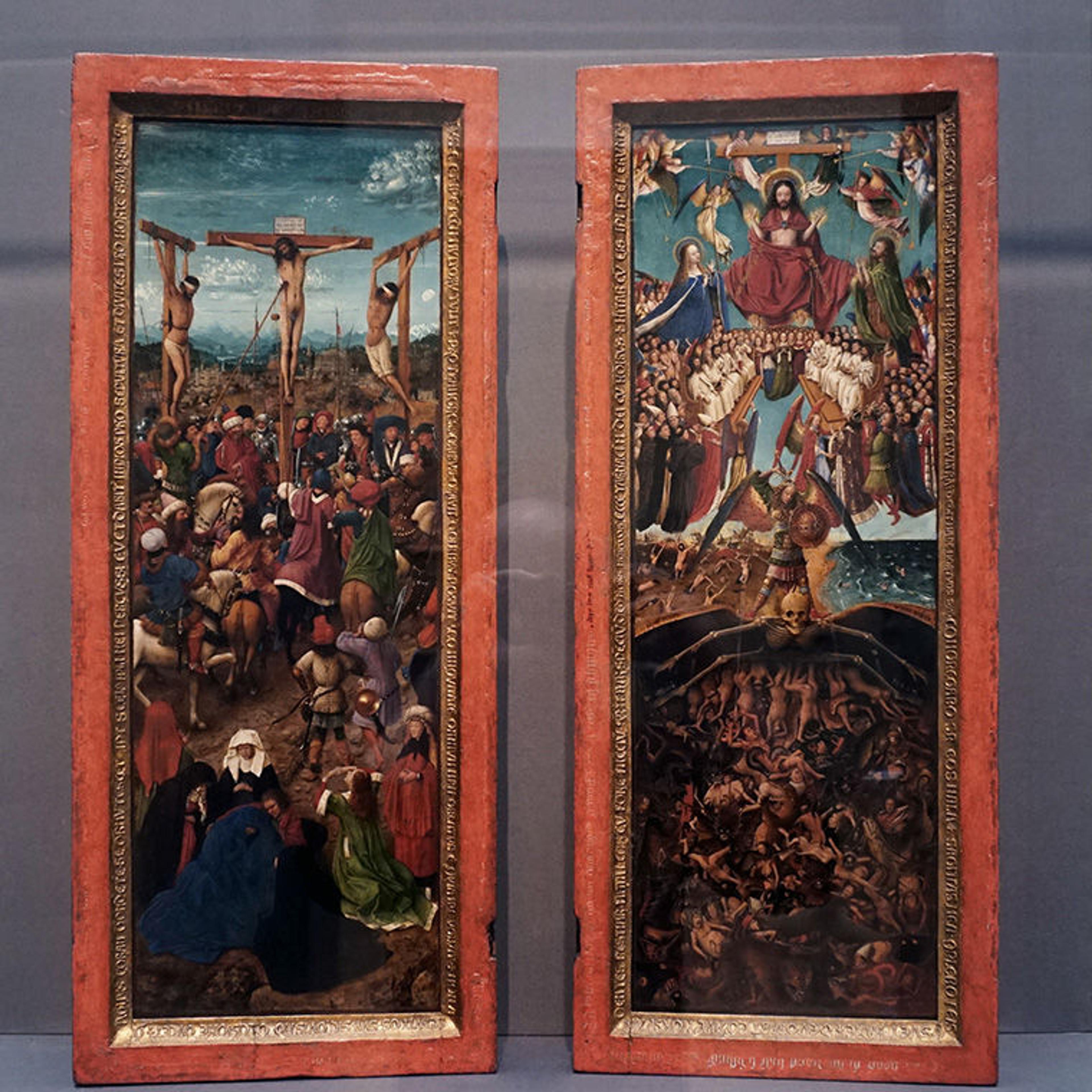
예수 책형 및 최후의 심판
Artwork Details
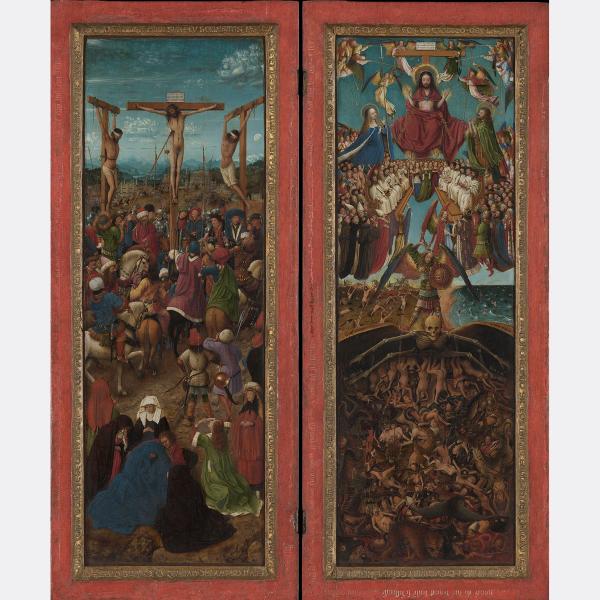
- 제목: 예수 책형 및 최후의 심판
- 아티스트: 얀 반 에이크 및 공방 조수, 네덜란드, 1390– 1 441년
- 연대: 1430년경
- 재료: 목재에서 옮긴 캔버스 유채
- 크기: 각기 56.5 × 19.7cm
- 크레디트 라인: 플레처 기금, 1933
- 작품 번호: 33.92ab
- Curatorial Department: European Paintings
Audio
5178. The Crucifixion; The Last Judgment
Jan van Eyck, 1440-41
RABBI SAMANTHA FRANK: Looking over to the left side with the crucifixion, I had a sense of understanding of how angry I might be at the people who caused that. And then as a Jew, another layer of sadness was added because that anger has been directed at Jews for hundreds of years.
I'm Rabbi Samantha Frank.
ADAM EAKER: This is a work of extraordinary artistic achievement, a work of great beauty. But it’s also a very painful work and a work that includes great ugliness.
Hi, my name is Adam Eaker, and I’m an associate curator in the Department of European Paintings at The Met. One goal that we have is to tell expanded stories about even the most famous works in our collection.
NARRATOR: In recent years, Met curator emerita Maryan Ainsworth has added new context to our understanding of this diptych, or painting consisting of two panels. Her research explores possible connections to prior violence against Jews that was used as a pretext for expelling the Jewish community in Brussels and seizing its property.
ADAM EAKER: In the middle ground of the left panel there’s a group of men on horseback who are gathered in front of the three crucified figures. And their features and their attire, such as the pointed hat, or the yellow garment, the large noses, all of these are things that we can associate with long traditions of anti-Semitic imagery.
RABBI SAMANTHA FRANK: These people, the ones who are mocking, the ones with these evil smiles, are meant to be the Jews. It just made me think about this Jewish idea of shlemut, of wholeness. And it's really connected to this idea of shalom, of peace. And we can't have peace without wholeness. And that means confronting the things that are challenging and being honest about them. We, as a society, have to grow in our ability to hold the wholeness, the good, the bad, the violent, the ugly, of our history wherever it is, including art.
Listen to more about this artwork
More Artwork
Related Content
Research Resources
The Met provides unparalleled resources for research and welcomes an international community of students and scholars. The Met's Open Access API is where creators and researchers can connect to the The Met collection. Open Access data and public domain images are available for unrestricted commercial and noncommercial use without permission or fee.
To request images under copyright and other restrictions, please use this Image Request form.
Feedback
We continue to research and examine historical and cultural context for objects in The Met collection. If you have comments or questions about this object record, please contact us using the form below. The Museum looks forward to receiving your comments.
Content Notice
The Metropolitan Museum of Art presents over 5,000 years of art from around the world, and our online collection reflects ongoing work conducted over the course of our more than 150-year history. You may encounter objects or images that may be inappropriate for some viewers or information that may be outdated.