Hair Comb Decorated with Rows of Wild Animals
Artwork Details
- Title: Hair Comb Decorated with Rows of Wild Animals
- Period: Predynastic, Late Naqada III
- Date: ca. 3200–3100 BCE
- Geography: From Egypt
- Medium: Ivory
- Dimensions: h. 5.5 cm (2 3/16 in); w. 3.9 cm (1 9/16 in); th. 0.5 cm (3/16 in)
- Credit Line: Theodore M. Davis Collection, Bequest of Theodore M. Davis, 1915
- Object Number: 30.8.224
- Curatorial Department: Egyptian Art
Audio
3215. Ivory Comb and Ceremonial Palette
Gallery 101
NARRATOR: At the top of this case, in the center, is a small ivory object. This is one of the most important pieces to have survived from the end of the Predynastic period. It’s the top of a decorative hair comb, but the teeth are mostly broken off. On both sides are rows of animals—here, on this side, we see, in the top row, elephants standing on serpents. Below are storks, and a single giraffe. Look carefully at the row of lions below: the one on the left is being attacked by a domesticated dog. This implies the presence of man—the tamer and hunter. All of the wild animals are carved as if in an orderly procession. This is what the Egyptians thought their role was: to bring order into the world.
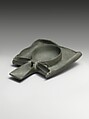
For another object with a similar theme, look in the lower left of this case for a small flat carving in greenish-grey slate. It depicts a large, coiled snake carved in its center. The snake is a symbol of the forces of chaos. Look closely: just above the snake is a small rectangle with demarcations. It represents an area of cultivated farmland. Above the land perches the royal falcon, representing the pharaoh. Günter Dreyer is Director of the German Institute of Archaeology in Cairo. Günter Dreyer.
GÜNTER DREYER: I think this one of the earliest Egyptian monuments with a royal name. It illustrates the main role of the Egyptian king, to control chaos.
NARRATOR: Indeed, the pharaoh was believed to be divine. It was only through his intervention with the gods that nature was tamed, and humans living under his domain continued to thrive. It’s a theme you’ll see again and again as you explore these galleries—from the earliest objects, like these, through three thousand years of ancient Egyptian art.
If you’d like to hear about another work in this case—an ivory knife handle—press the green play button now.
Listen to more about this artwork
More Artwork
Related Content

Research Resources
The Met provides unparalleled resources for research and welcomes an international community of students and scholars. The Met's Open Access API is where creators and researchers can connect to the The Met collection. Open Access data and public domain images are available for unrestricted commercial and noncommercial use without permission or fee.
To request images under copyright and other restrictions, please use this Image Request form.
Feedback
We continue to research and examine historical and cultural context for objects in The Met collection. If you have comments or questions about this object record, please contact us using the form below. The Museum looks forward to receiving your comments.
Content Notice
The Metropolitan Museum of Art presents over 5,000 years of art from around the world, and our online collection reflects ongoing work conducted over the course of our more than 150-year history. You may encounter objects or images that may be inappropriate for some viewers or information that may be outdated.