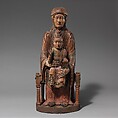
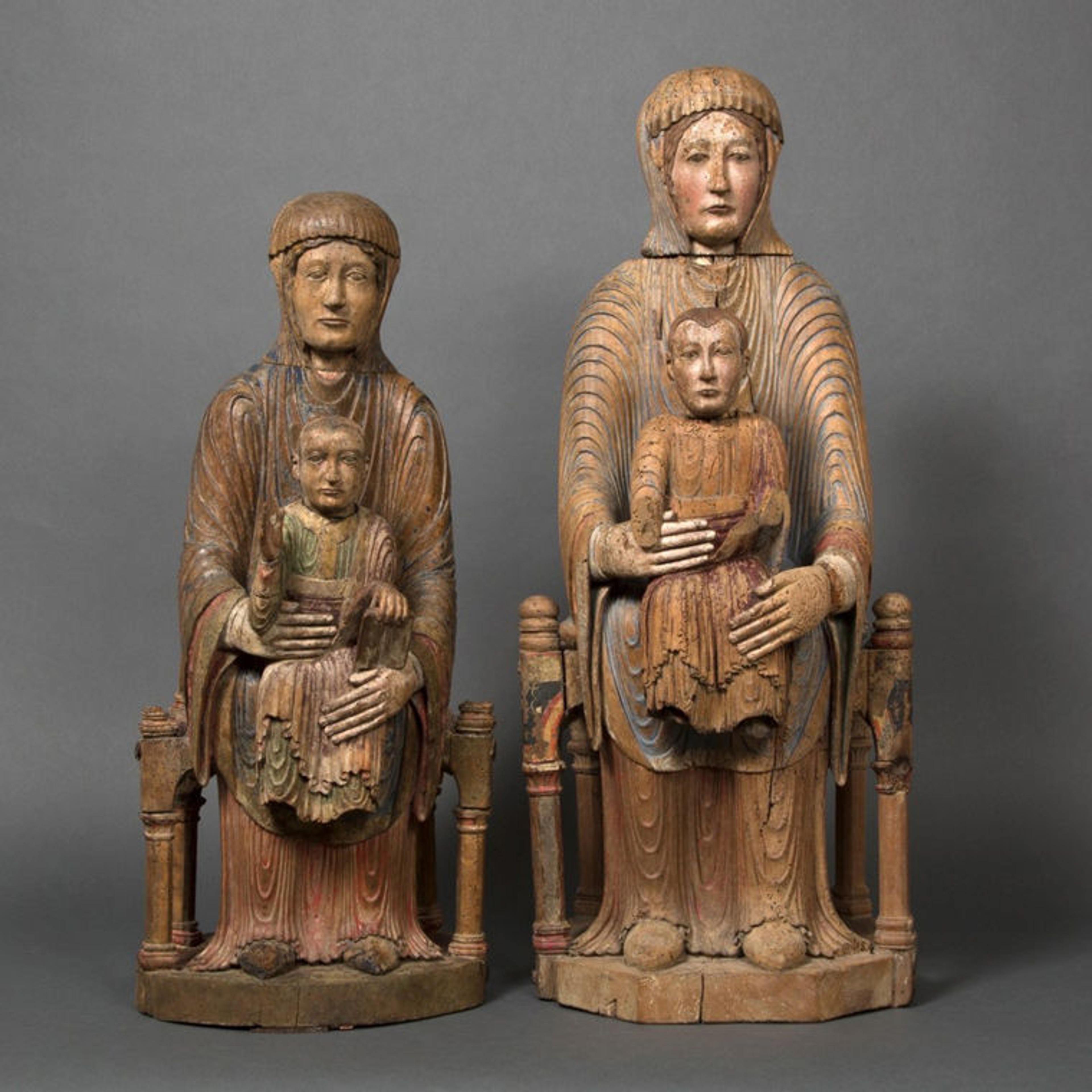
Virgem e o Menino entronizados
Artwork Details
- Título: Virgem e o Menino entronizados
- Data: ca. 1150–1200
- Geografia: França, Auvernia
- Cultura: França
- Meio: Madeira de nogueira, pintura, gesso, linho
- Dimensões: 79,5 x 31,7 x 29,2 cm
- Linha de créditos: Doação de J. Pierpont Morgan, 1916
- Número de acesso: 16.32.194a, b
- Curatorial Department: Medieval Art and The Cloisters
Audio
82. Virgin and Child in Majesty, Part 1
Gallery 304
ED VESSEL: The brain is intimately attuned to the minute differences in shape and arrangement of the hands. For example, understanding the particular meaning conveyed by particular hand grasps.
NARRATOR: Due to the condition of this sculpture, some important hand gestures have been lost.
GRIFFITH MANN: You see the hands of the Virgin Mary reaching around to hold the Christ Child, but Christ's arms and hands are missing. His right hand, which is extended towards us, would have been making a gesture of blessing, with two fingers raised up. And then his left hand probably would have been holding a book representing the Word made Flesh in the figure of Christ.
MELANIE HOLCOMB: The hand is a powerful symbol for a Medieval viewer. Many, many images from the Middle Ages will sometimes only represent God by a hand, because the hand suggests that we can't understand the whole body, the whole outline of God.
NARRATOR: Learn about this sculpture’s context. Press play.
Listen to more about this artwork
More Artwork

Related Content

Research Resources
The Met provides unparalleled resources for research and welcomes an international community of students and scholars. The Met's Open Access API is where creators and researchers can connect to the The Met collection. Open Access data and public domain images are available for unrestricted commercial and noncommercial use without permission or fee.
To request images under copyright and other restrictions, please use this Image Request form.
Feedback
We continue to research and examine historical and cultural context for objects in The Met collection. If you have comments or questions about this object record, please contact us using the form below. The Museum looks forward to receiving your comments.
Content Notice
The Metropolitan Museum of Art presents over 5,000 years of art from around the world, and our online collection reflects ongoing work conducted over the course of our more than 150-year history. You may encounter objects or images that may be inappropriate for some viewers or information that may be outdated.