维纳斯和丘比特
Artwork Details
- 标题: 维纳斯和丘比特
- 艺术家: 洛伦佐·洛托,意大利,约1480–1556年
- 创作日期: 1520年代中期
- 材料: 布面油画
- 尺寸: 363⁄8 x 437⁄8 英寸(92.4 x 111.4厘米)
- 来源信息: 购买,查尔斯·赖茨曼夫人捐赠,以纪念玛丽埃塔· 翠里,1986年
- 藏品编号: 1986.138
- Curatorial Department: European Paintings
Audio
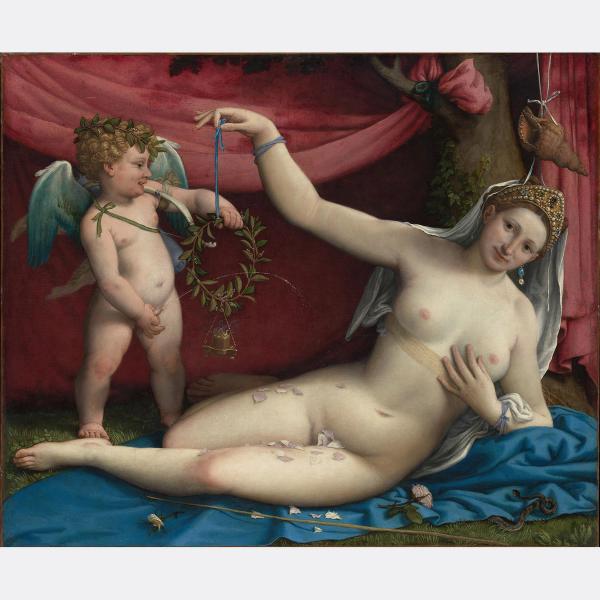
5079. Venus and Cupid
Lorenzo Lotto, 1520s
DR. ORNA GURALNIK: It made me laugh a lot, this painting. It's just like, wild. It's surprisingly wild, playful, kinky, delightful.
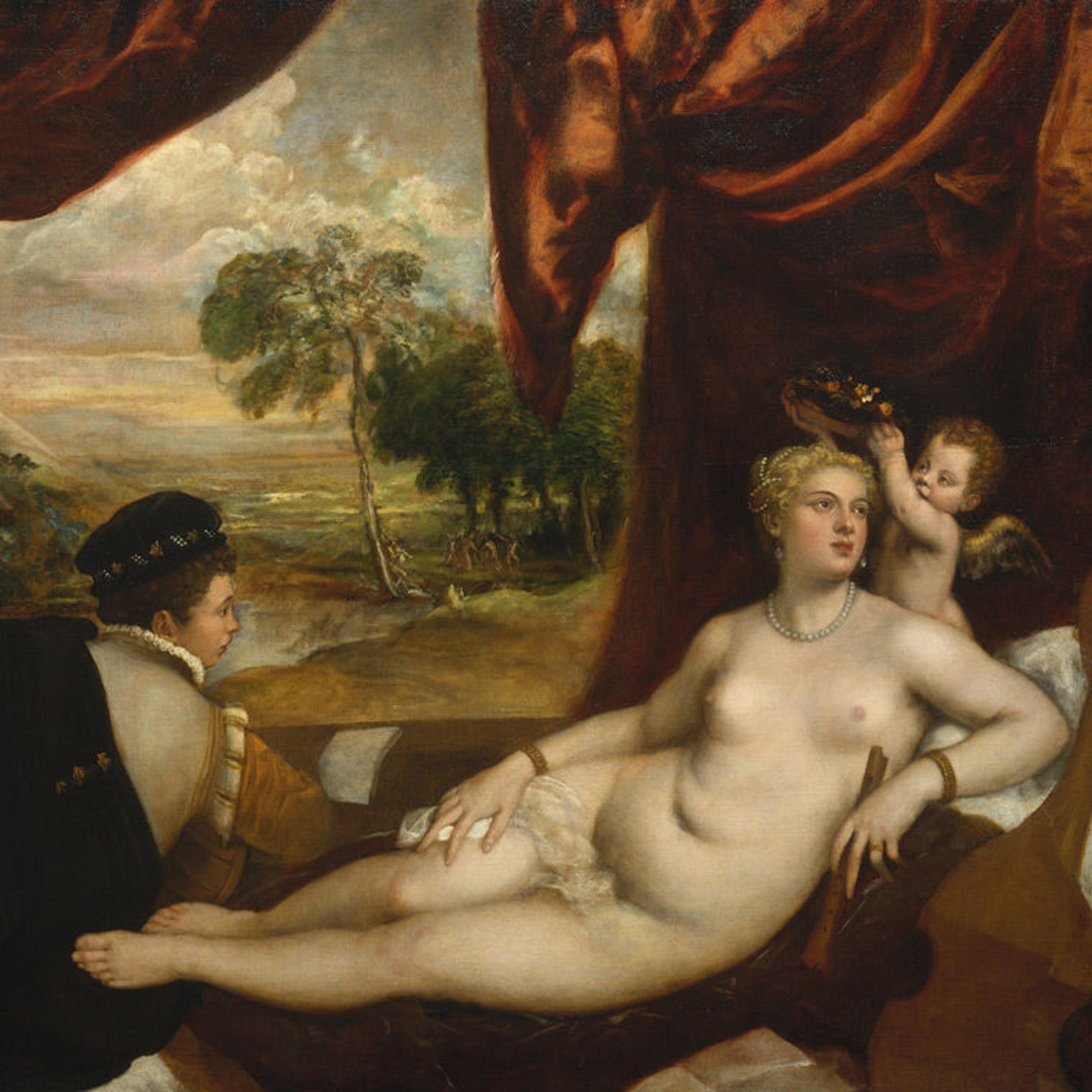
TIFFANY RACCO: The presence of Cupid and the numerous symbols scattered throughout this picture indicate really that this was probably commissioned to celebrate a marriage.
DR. ORNA GURALNIK: Wow, that's, um, an interesting painting as a gift for a marriage.
My name is Orna Guralnik. I am a clinical psychologist and a psychoanalyst, and the therapist on Showtime’s “Couples Therapy.”
TIFFANY RACCO: Hi, my name is Tiffany Racco, I’m a research associate in European paintings at The Metropolitan Museum of Art.
DR. ORNA GURALNIK: And Cupid is kind of peeing through this wreath; what is this? [laughs]
TIFFANY RACCO: To answer that it helps to know that the appearance of mischievous peeing youths was actually a tradition commonly found in Renaissance imagery. We are likely meant to think of his stream less as actual urine and more as a kind of pure water that has the power to bring about health and happiness.
I would say that even though it plays to a certain shock value, it likely wasn’t seen as bizarre per se to contemporary viewers. Gods and goddesses, who were often shown in somewhat outlandish situations that transcended the boundaries of everyday life.
NARRATOR: Around 20 years before this painting was made, the rediscovery of ancient statues, reliefs, and coins near Rome set off a renewed interest in classical art and myth.
TIFFANY RACCO: It’s actually been proposed that the face of Venus may be a portrait of the bride given how individual her features are. So, if we take this to be true, we begin to see how classical myth became a way of visualizing one’s self in the most idealized way. Gods and goddesses became vehicles for individuals to kind of create an alter ego. And for artists the rediscovery of antiquity became an opportunity to develop new subject matter based around stories of love and lust and fidelity and strength.
More Artwork

Related Content
Research Resources
The Met provides unparalleled resources for research and welcomes an international community of students and scholars. The Met's Open Access API is where creators and researchers can connect to the The Met collection. Open Access data and public domain images are available for unrestricted commercial and noncommercial use without permission or fee.
To request images under copyright and other restrictions, please use this Image Request form.
Feedback
We continue to research and examine historical and cultural context for objects in The Met collection. If you have comments or questions about this object record, please contact us using the form below. The Museum looks forward to receiving your comments.
Content Notice
The Metropolitan Museum of Art presents over 5,000 years of art from around the world, and our online collection reflects ongoing work conducted over the course of our more than 150-year history. You may encounter objects or images that may be inappropriate for some viewers or information that may be outdated.