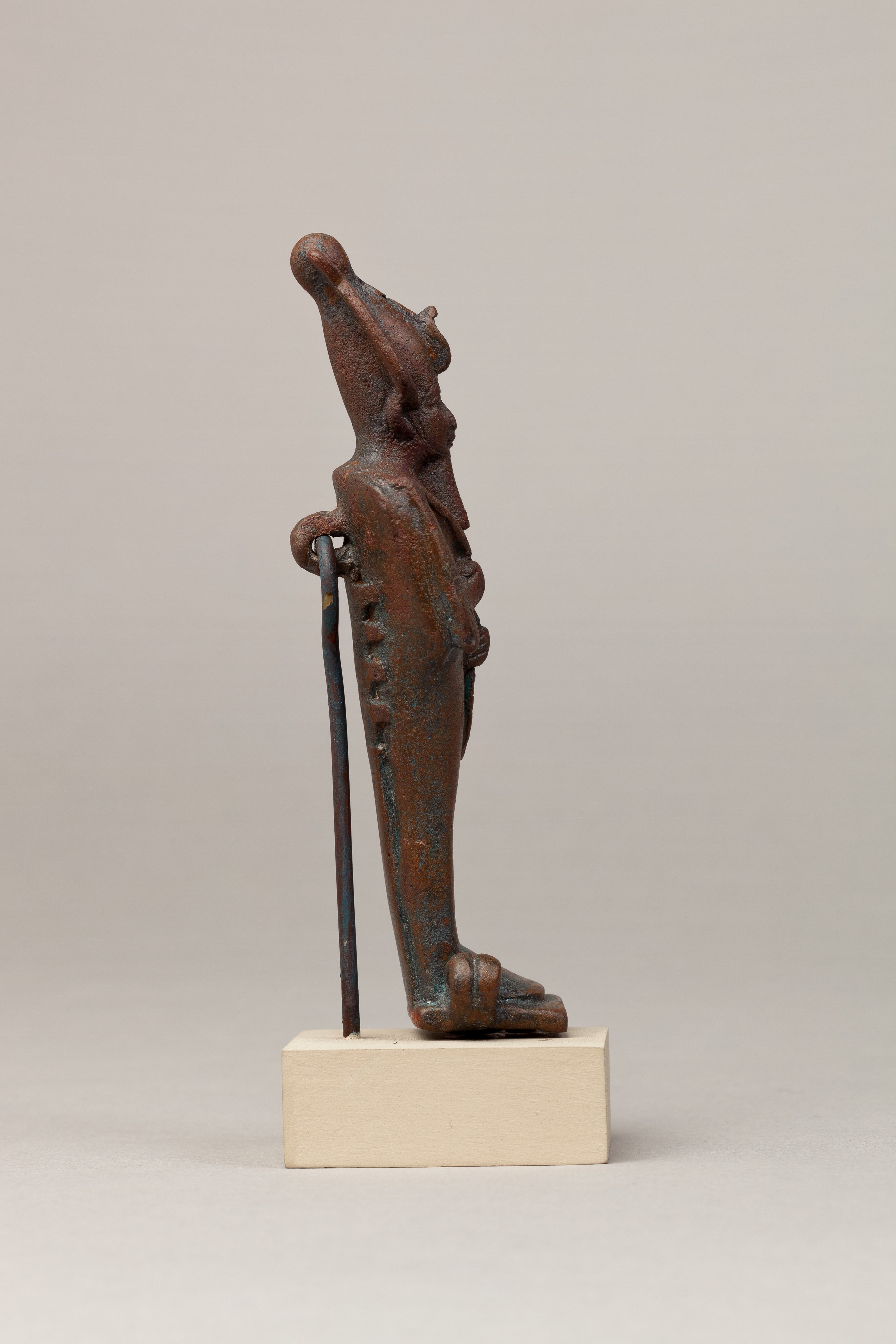
Osiris
Late Period–Ptolemaic Period
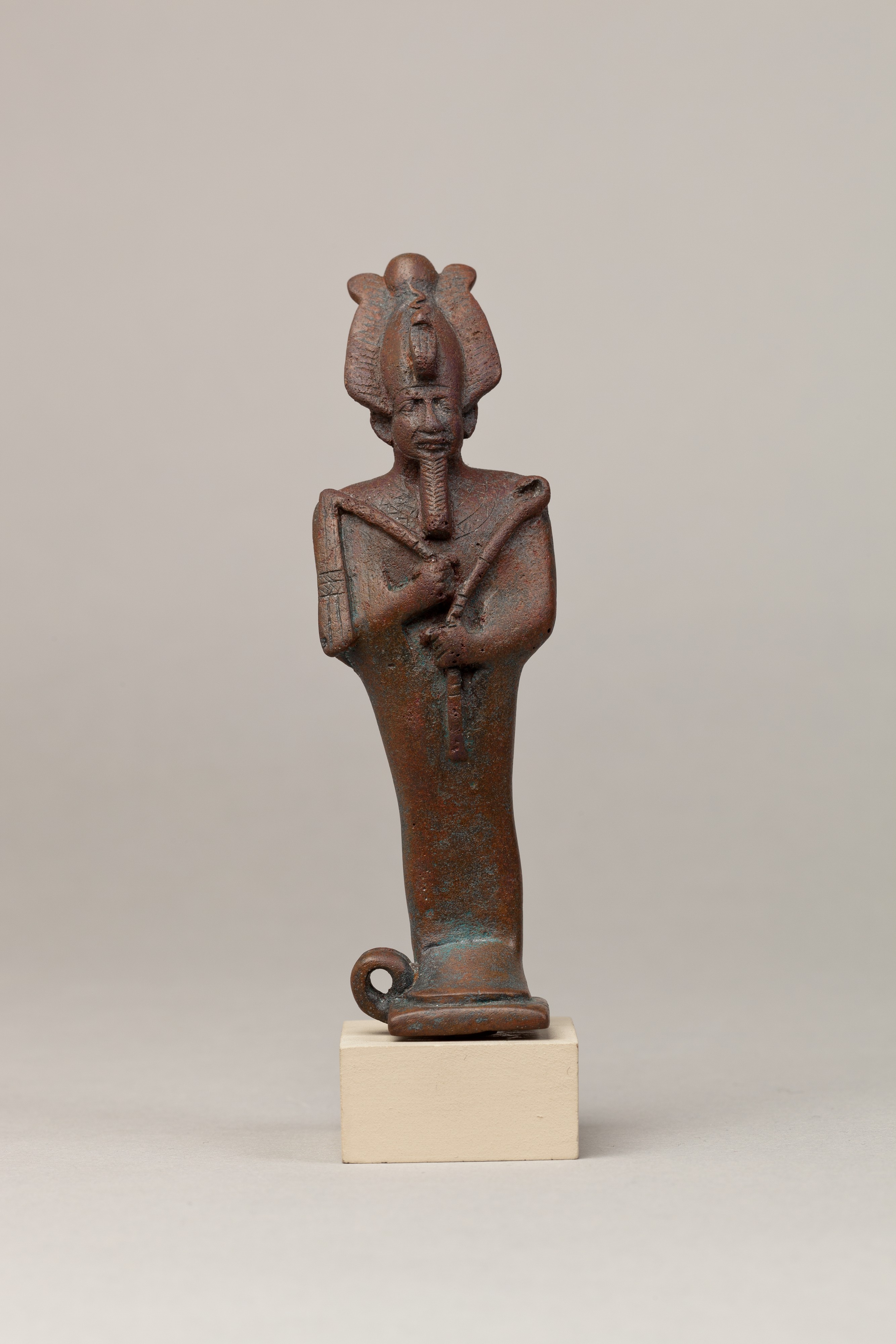
Osiris, foremost of the Egyptian funerary gods and ruler of the underworld, stands upright in a close-fitting enveloping garment. The garment has a stiff upper edge along the back of the neck, a feature that occurs with some regularity on this garment, but one with an unclear meaning. A lightly incised broad collar is visible on his chest. He holds the royal crook and flail with his hands poised asymmetrically.
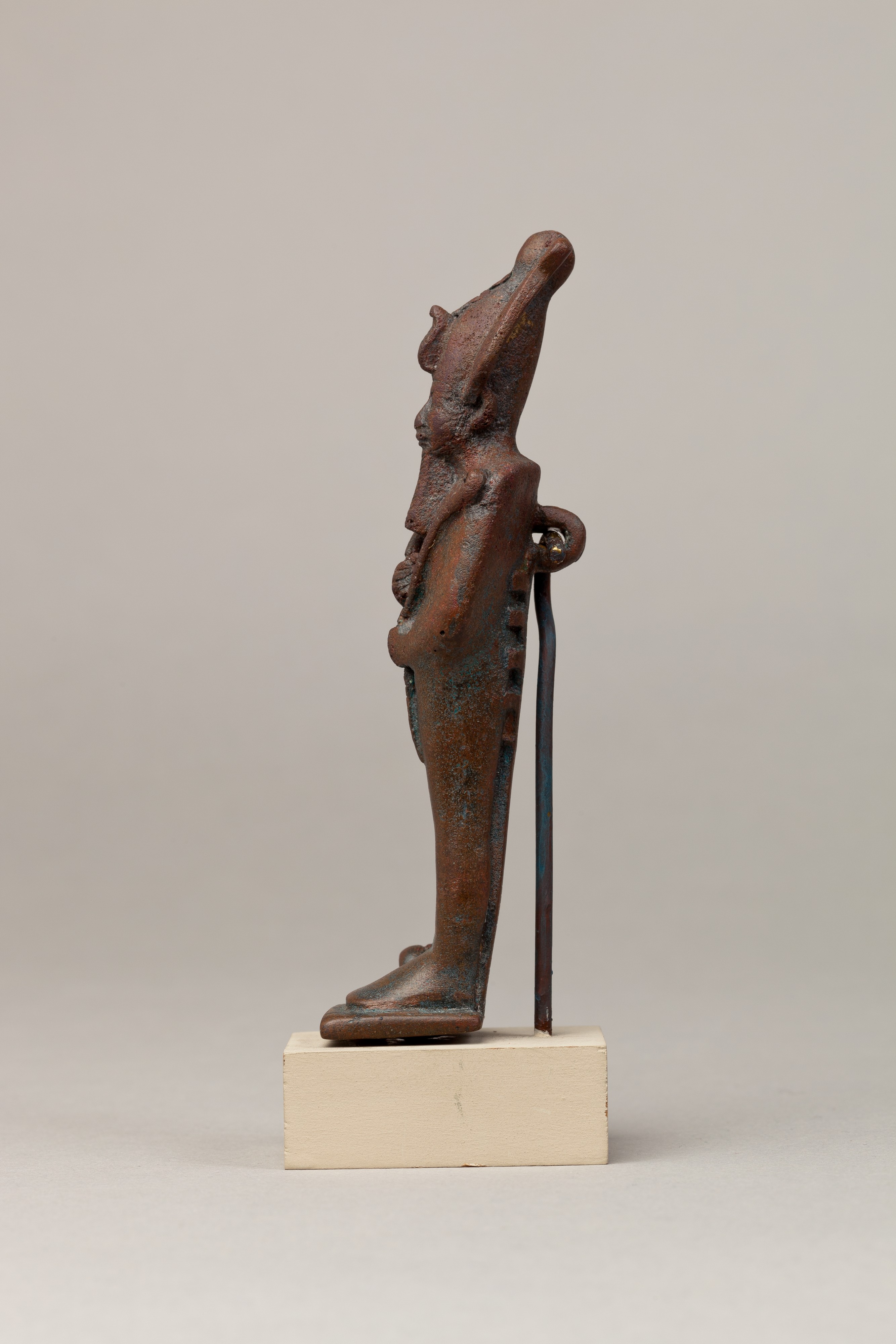
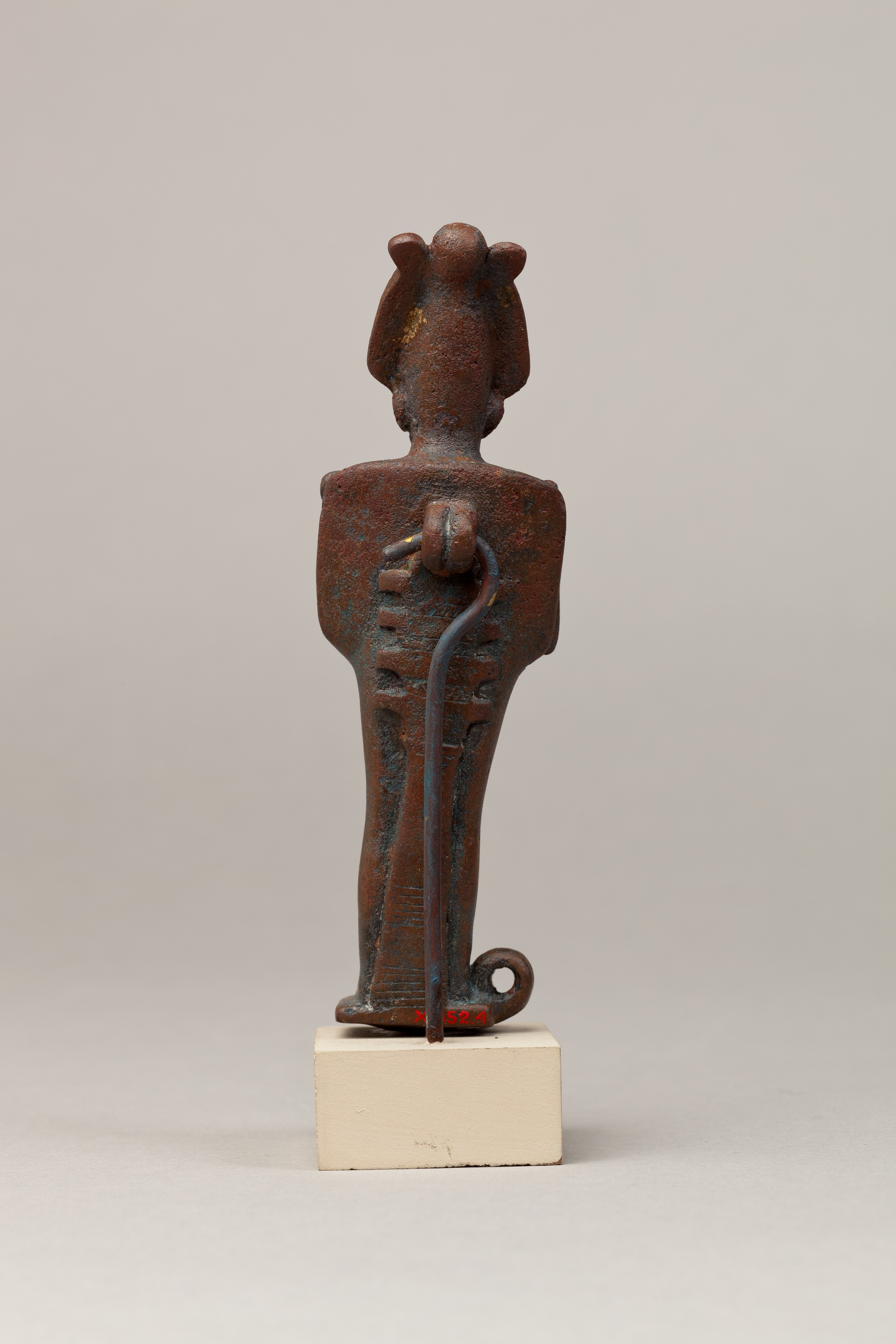
On the back, Osiris has a figured back pillar in the form of a djed pillar. Another curious feature is the presence of not one, but two suspension loops, one at the neck and one on the base, in addition to the regular tang. For this reason, this piece is an excellent example of how a few particular characteristics tend to appear together on some Osiris figures: namely, the double loops and the decorated back pillar. Each feature can and does appear on its own, but their tendency to group together is striking; perhaps it is an innovation of a workshop, or signals a certain ritual context for the statuette.
In general, Osiris statuettes were some of the most abundant temple offerings in Egypt by the first millennium B.C., reflecting both the god’s importance and changing cult practices that spurred the wide-scale dedication of deity statuettes. Many statues of Osiris were offered in temples and shrines belonging to him, but they have also been found in other contexts, for example near temples and shrines honoring other prominent deities or in animal necropoleis.
This image cannot be enlarged, viewed at full screen, or downloaded.

This artwork is meant to be viewed from right to left. Scroll left to view more.