To celebrate Hispanic/Latine Heritage Month, we're offering a self-guided tour through The Met collection. Inspired by our weekly Members tours running through October 13, you’re invited to use this guide and travel through our galleries at your own pace or right from your home.
Featuring artworks selected by Museum guides, this tour explores pieces in our collection that spotlight the rich stories, perspectives, and artistic contributions of Hispanic and Latine cultures throughout history. Consider becoming a Member to enjoy Heritage Month tours like this one, plus unlimited free admission, priority access to exhibitions, and invitations to Members-only events.
Your support helps us further the study and preservation of The Met collection—and the invaluable stories held within each piece. Read on to discover the powerful narratives woven into the art across our galleries.
Tour Stops
Discover these objects from The Met’s Arts of the Ancient Americas galleries, a collection of ancestral arts of the Americas, representing the artistic legacy of Indigenous artists from across North, Central, and South America and the Caribbean prior to 1600 CE.
Censer with seated king
Gallery 360
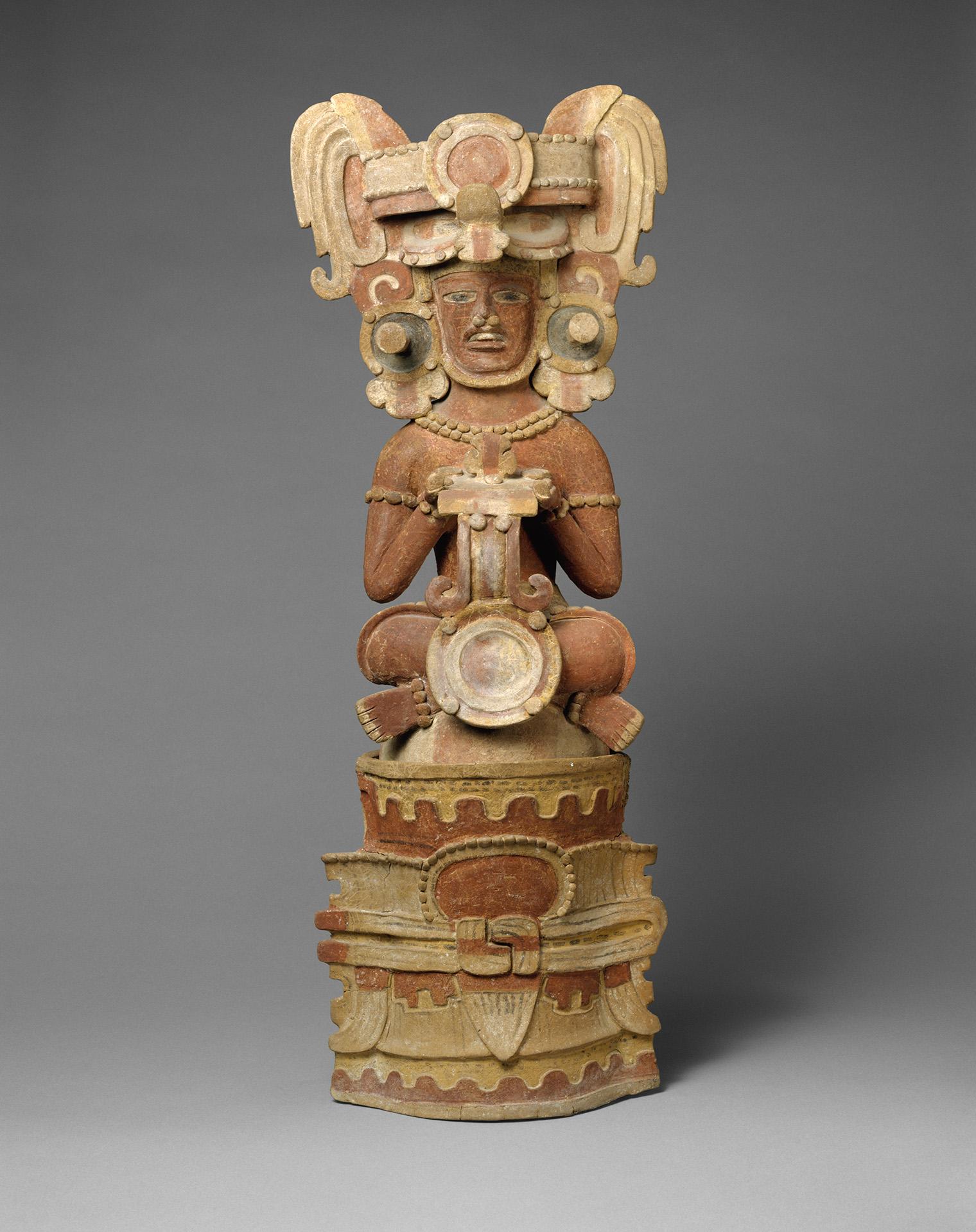
Maya artist(s). Censer with seated king, 300–400 CE. Ceramic, slip, H. 31 1/2 × W. 12 1/4 × D. 9 in. (80 × 31.1 × 22.9 cm). The Metropolitan Museum of Art, New York, Gift of Charles and Valerie Diker, 1999 (1999.484.1a, b)
This imposing incense burner shows a Maya ruler wearing a large, elaborate headdress and jewelry assemblage. Jade beads, in the form of round appliques that were once painted blue-green, decorate the figure's ankles, biceps, nostrils, and shoulders. Incense was a key component of ancient Maya rituals, as well as in contemporary rituals of Maya descendants. Practitioners and royal families offered burning incense to communicate with ancestors and deities in the supernatural realm.
Sphere
Gallery 360
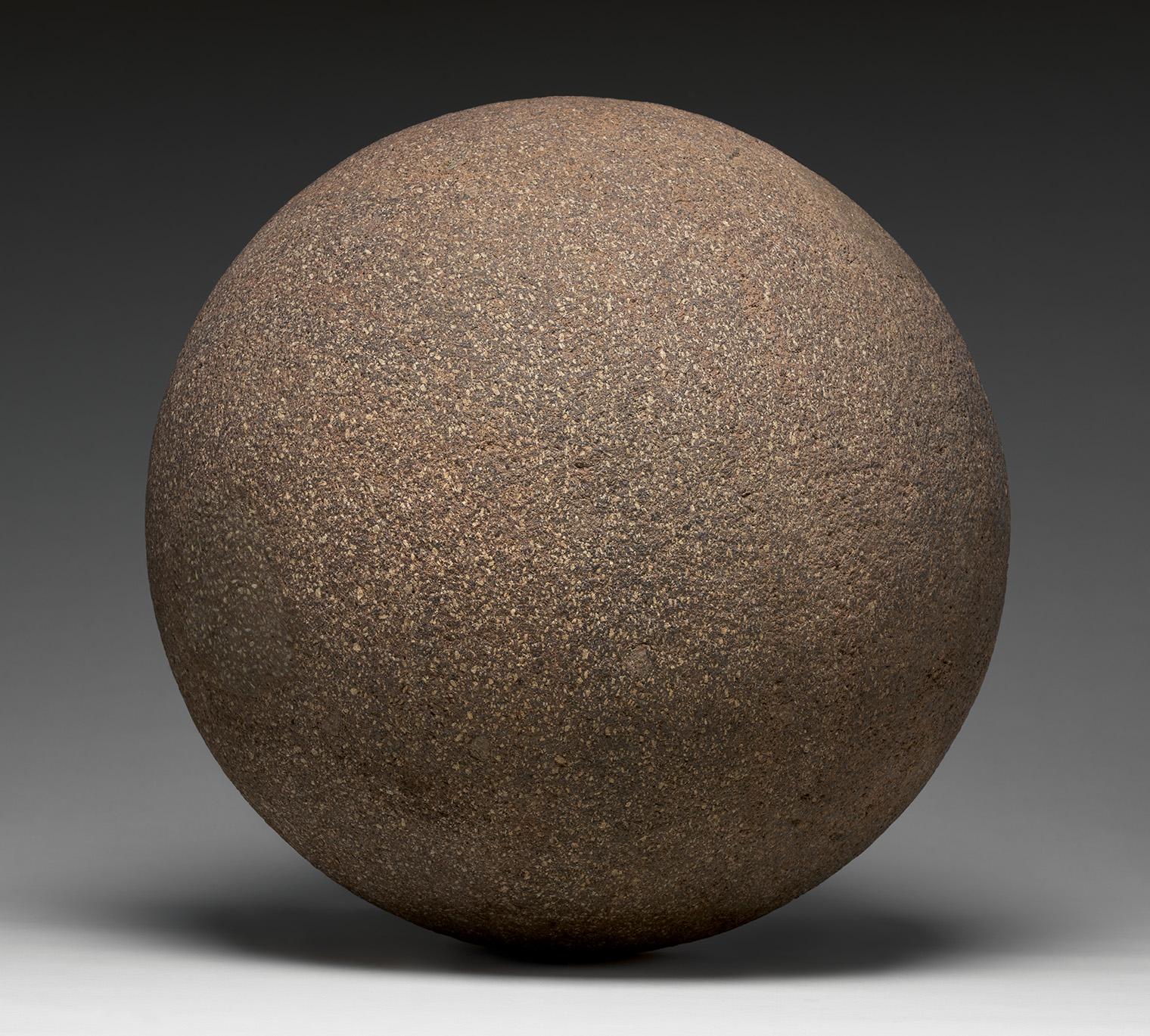
Sphere, 800–1550 CE. Diquís. Andesite, Diam. 26 1/2 in. (67.3 cm). The Metropolitan Museum of Art, New York, Gift of the Austen-Stokes Ancient Americas Foundation, 2012 (2012.530.3)
Hundreds of these petrospheres can be found in Costa Rica, ranging from handheld-sized to over six feet in diameter. The stone spheres are most often constructed from igneous rocks common to the area. Without metal tools, craftspeople worked the surface with stone implements to create perfect spheres. The meaning of the spheres is not well understood; clearly, these monumental sculptures were prestige objects that marked the landscape around the ancient Diquís communities for residents and visitors alike to behold with awe.
Face
Gallery 360
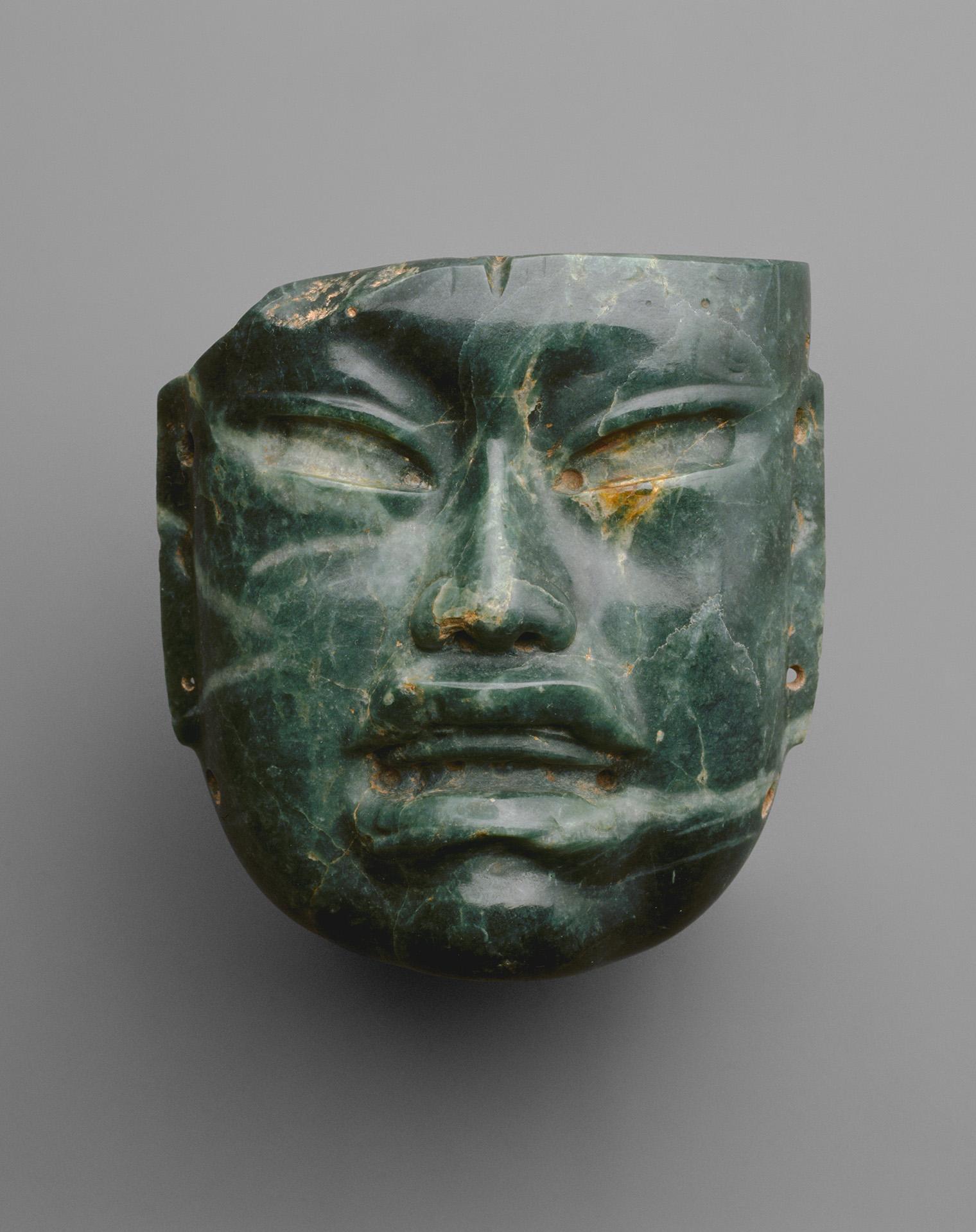
Olmec artist(s). Face, 900–400 BCE. Jadeite, H. 5 3/4 × W. 5 1/2 × D. 3 in. (14.6 × 14 × 7.6 cm). The Metropolitan Museum of Art, New York, Bequest of Alice K. Bache, 1977 (1977.187.33)
The Olmec, whose heartland was located in present-day Mexico from 1200–400 BCE, excelled in creating fine greenstone sculptures. Although rendered in a naturalistic style, this jadeite face itself is not fully human. The Olmec Maize God is evoked through the defined cleft at the center of the upper forehead, which represents the earth from which maize sprouts and grows.
Funerary mask
Gallery 361
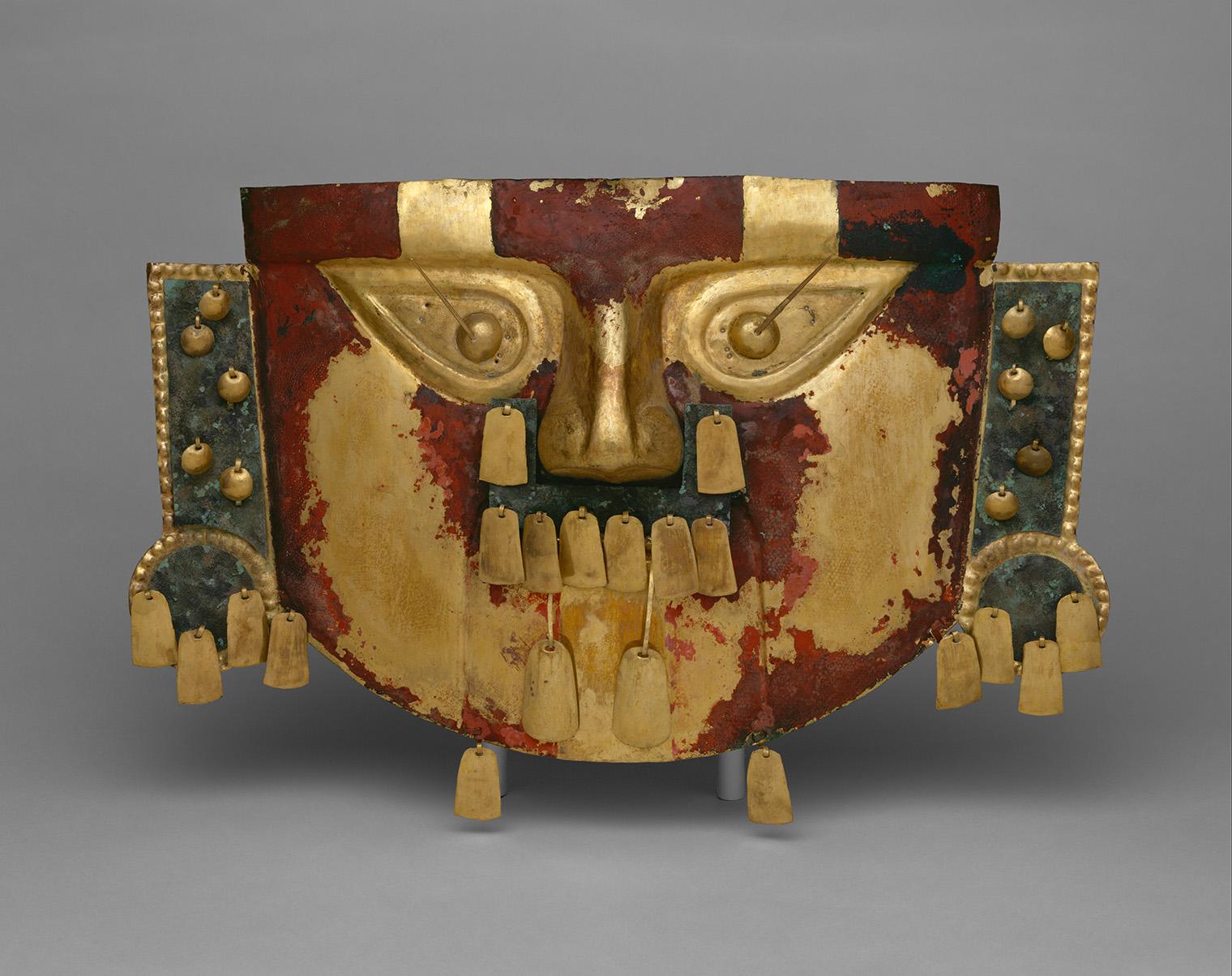
Lambayeque (Sicán) artist(s). Funerary mask, 900–1100 CE. Gold, silver-copper alloy, cinnabar, H. 11 1/2 in. × W. 19 1/2 in. × D. 4 in. (29.2 × 49.5 × 10.2 cm). The Metropolitan Museum of Art, New York, Gift and Bequest of Alice K. Bache, 1974, 1977 (1974.271.35)
This funerary mask, made of hammered sheet gold alloy and covered in red pigment, once adorned the body of a deceased ruler on Peru’s north coast. Powerful dynasties arose in this region between the eighth and the fourteenth centuries CE. The lords of these dynasties patronized vast workshops that created finely crafted ornaments and ceremonial vessels. After their deaths, the lords were buried deep in monumental, mud-brick platform mounds with objects of precious metal, shell, and cloth like this mask.
Scepter wand with feathers
Gallery 363
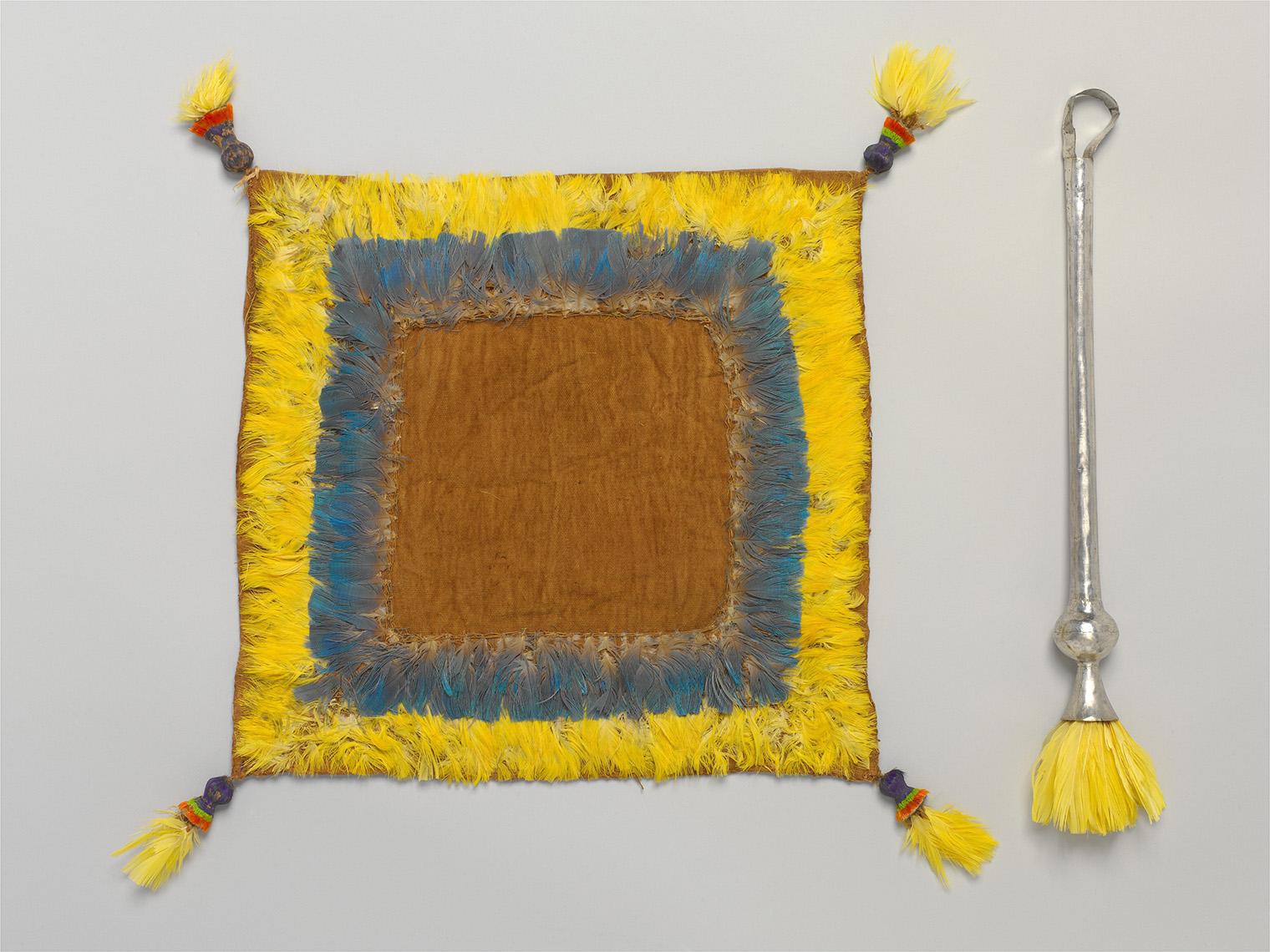
Scepter wand with feathers, 1200–1500 CE. Chimú or Chancay. Silver, feathers, Length 14-5/8 in. (37 cm). The Metropolitan Museum of Art, New York, Bequest of Jane Costello Goldberg, from the Collection of Arnold I. Goldberg, 1986 (1987.394.671)
This delicate featherwork structure and silver scepter, topped with macaw feathers, from 1200–1500 CE has survived to the present day. Accounts written by sixteenth-century Spanish chroniclers suggest that feathers in ancient Peru embellished tunics or tabards, headdresses, and accessories that high-ranking individuals wore or exchanged during ceremonies and festive occasions. Feathers were chosen primarily for their radiant colors, striking iridescence, and silken textures, properties that could not be easily achieved with natural fabric dyes.
Tunic
Gallery 363
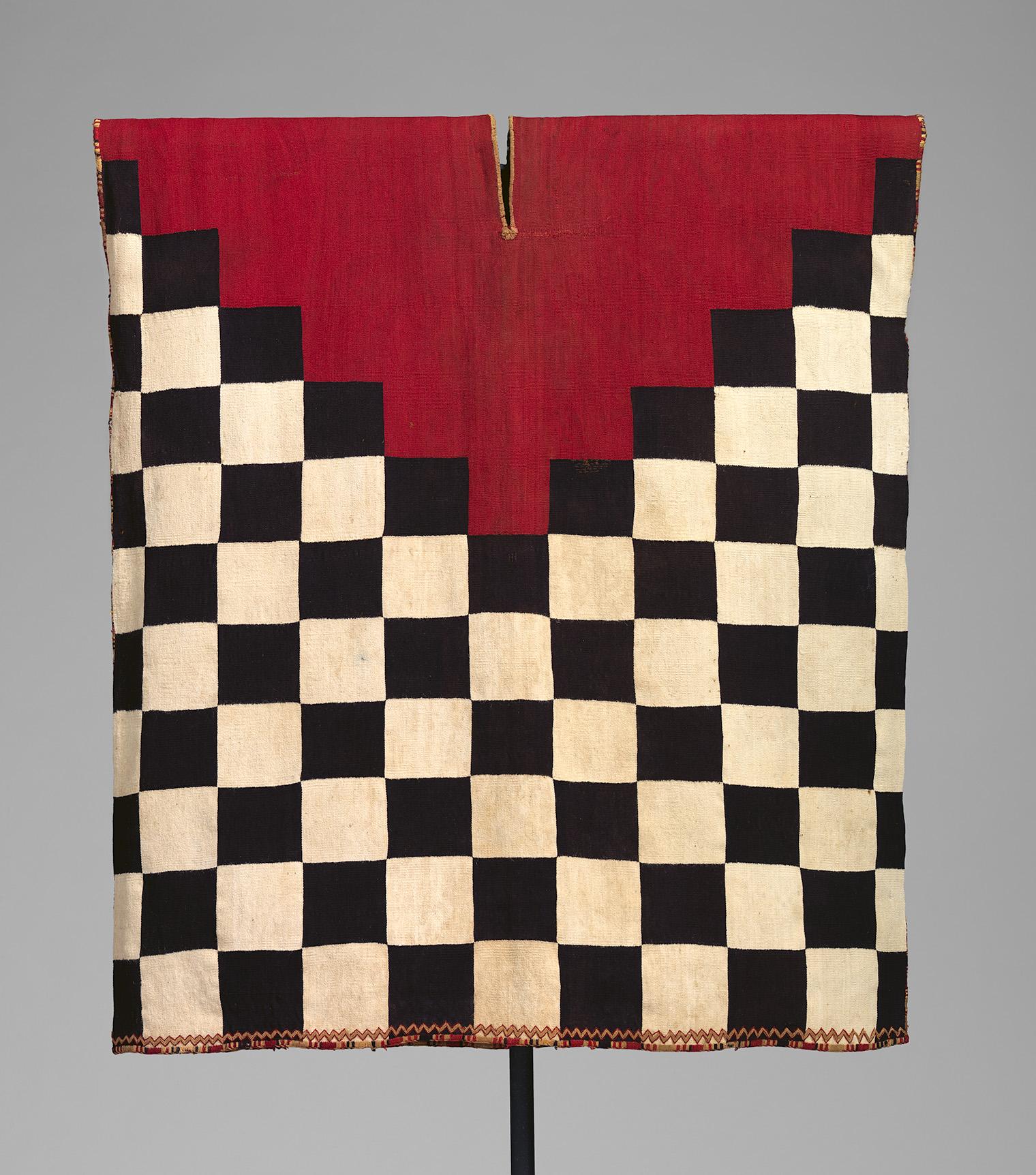
Inca artist(s). Tunic, 1400–1535 CE. Camelid fiber, H. 34 1/4 x W. 30 1/8 in. (87 x 76.5 cm). The Metropolitan Museum of Art, New York, Purchase, Fletcher Fund, Claudia Quentin Gift, and Harris Brisbane Dick Fund, 2017 (2017.674)
Men wore this fine tapestry garment over a loincloth, and such garments were primary markers of identity in the Inca Empire. Cloth was profoundly important in Inca culture: major events often included exchanging, gifting, burning, or sacrificing textiles. The Inca state closely controlled ownership and use of tapestry tunics, and only those who received such gifts were allowed to wear them.
Next, head to Gallery 965 in the Robert Lehman Wing, where a selection of works from our exhibition, The Face of Life: Modern Portraits at The Met, examines the language of portraiture.
Diego Rivera’s The Café Terrace
Gallery 965
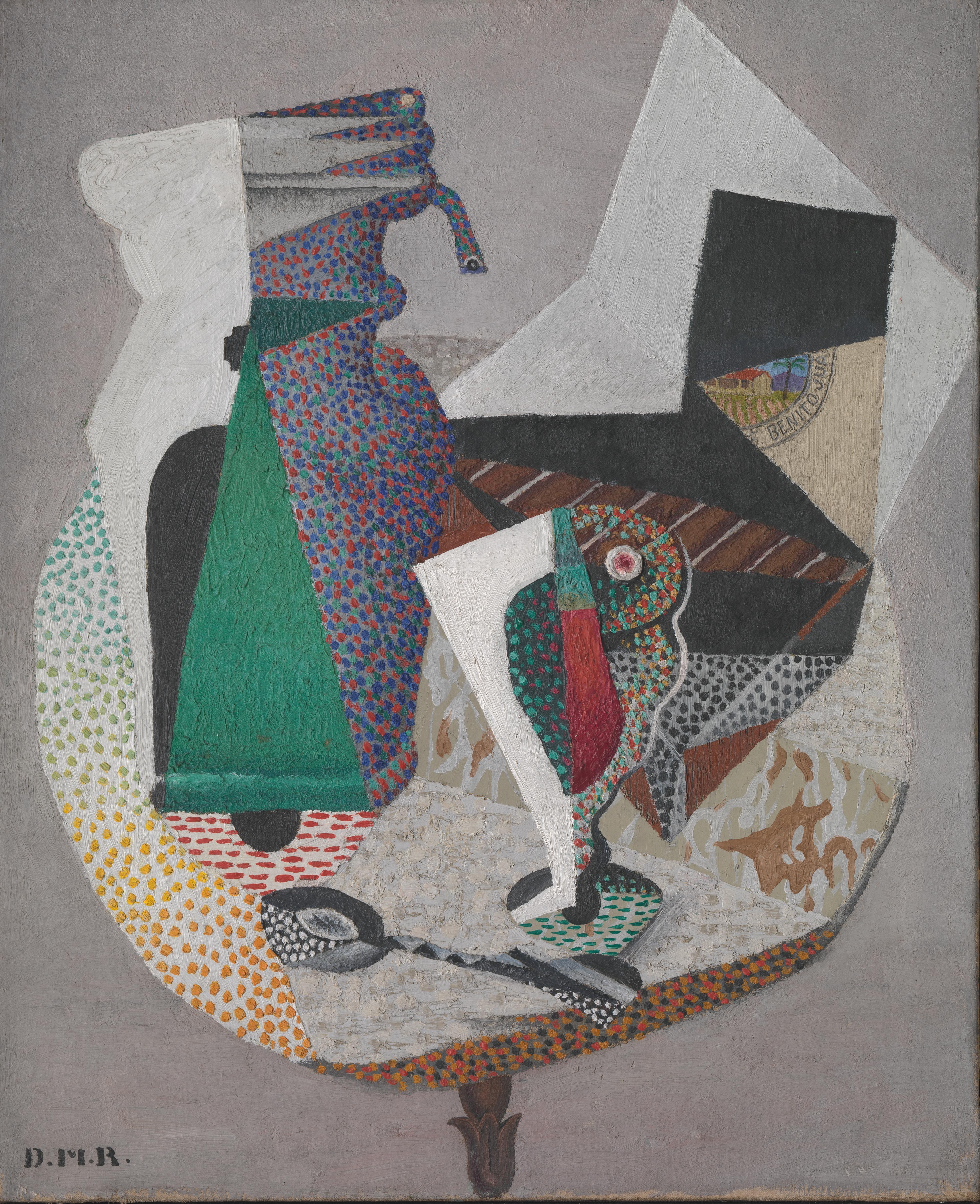
Diego Rivera (Mexican, 1886–1957). The Café Terrace, 1915. Oil on canvas, 23 7/8 × 19 1/2 in. (60.6 × 49.5 cm). The Metropolitan Museum of Art, New York, Alfred Stieglitz Collection, 1949 (49.70.51). © 2026 Artists Rights Society (ARS), New York
In the distinct brand of Cubism that he developed while living temporarily in Paris, Rivera used small dots of color, a technique known as Pointillism, to amplify contrasts in texture and pattern. Here, the sleek bottle of green liquid, presumably absinthe, and the shiny metal spoon to prepare the potent drink are paired against a strip of camouflage tablecloth, a reference to World War I. Additionally, the artist includes references to his homeland, such as the cigar box with a partial label reading BENITO JUA, referring to Benito Juárez, the President of Mexico from 1858 until his death in 1872.
Pablo Picasso’s Gertrude Stein
Gallery 965
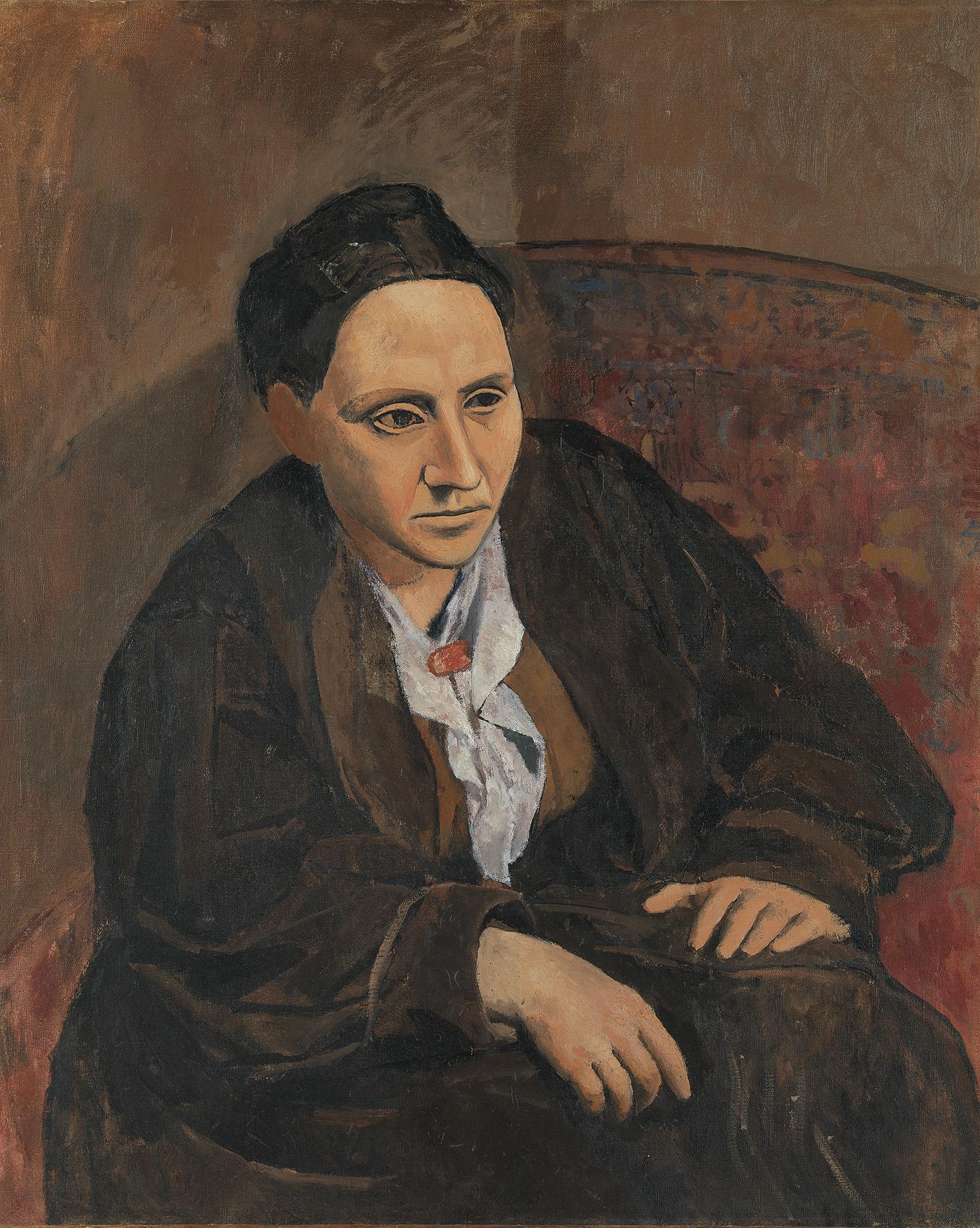
Pablo Picasso (Spanish, 1881–1973). Gertrude Stein, 1905–6. Oil on canvas, 39 3/8 × 32 in. (100 × 81.3 cm). The Metropolitan Museum of Art, New York, Bequest of Gertrude Stein, 1946 (47.106). © 2026 Estate of Pablo Picasso / Artists Rights Society (ARS), New York
The famous writer and expatriate Gertrude Stein was among the first Americans to respond enthusiastically to European avant-garde art. She held weekly salons in her Paris apartment populated by European and American artists and writers. For Picasso, Stein’s early patronage and friendship were critical to his success. He painted her portrait between 1905 and 1906 at the end of his so-called "Rose Period." He reduces her body to simple masses—a foreshadowing of his adoption of Cubism.
On the second floor in our European Paintings galleries, you’ll find two pieces demonstrating the sacredness of the Virgin Mary in both Peruvian and Colombian culture during the seventeenth and eighteenth centuries.
Our Lady of Valvanera
Gallery 626
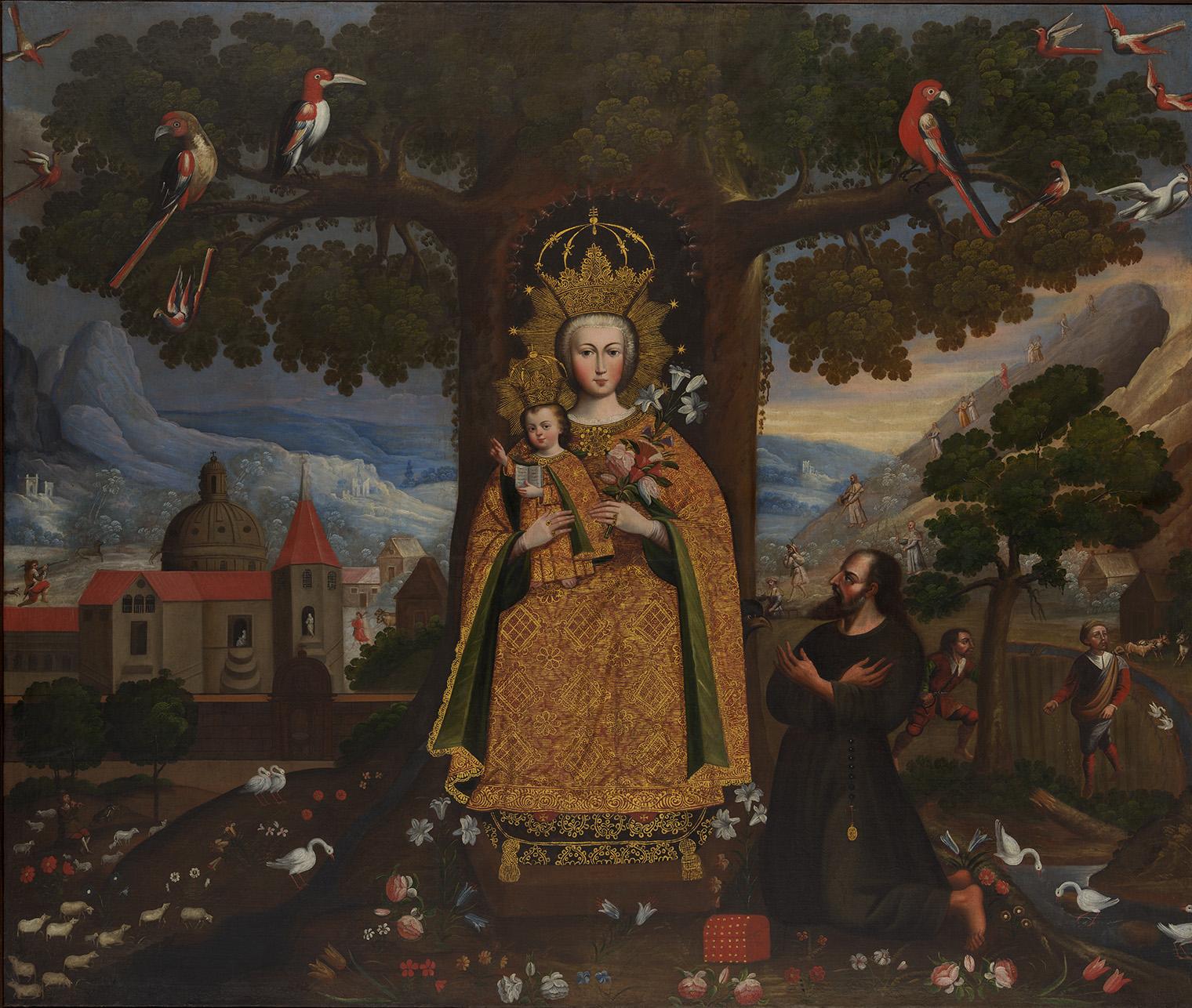
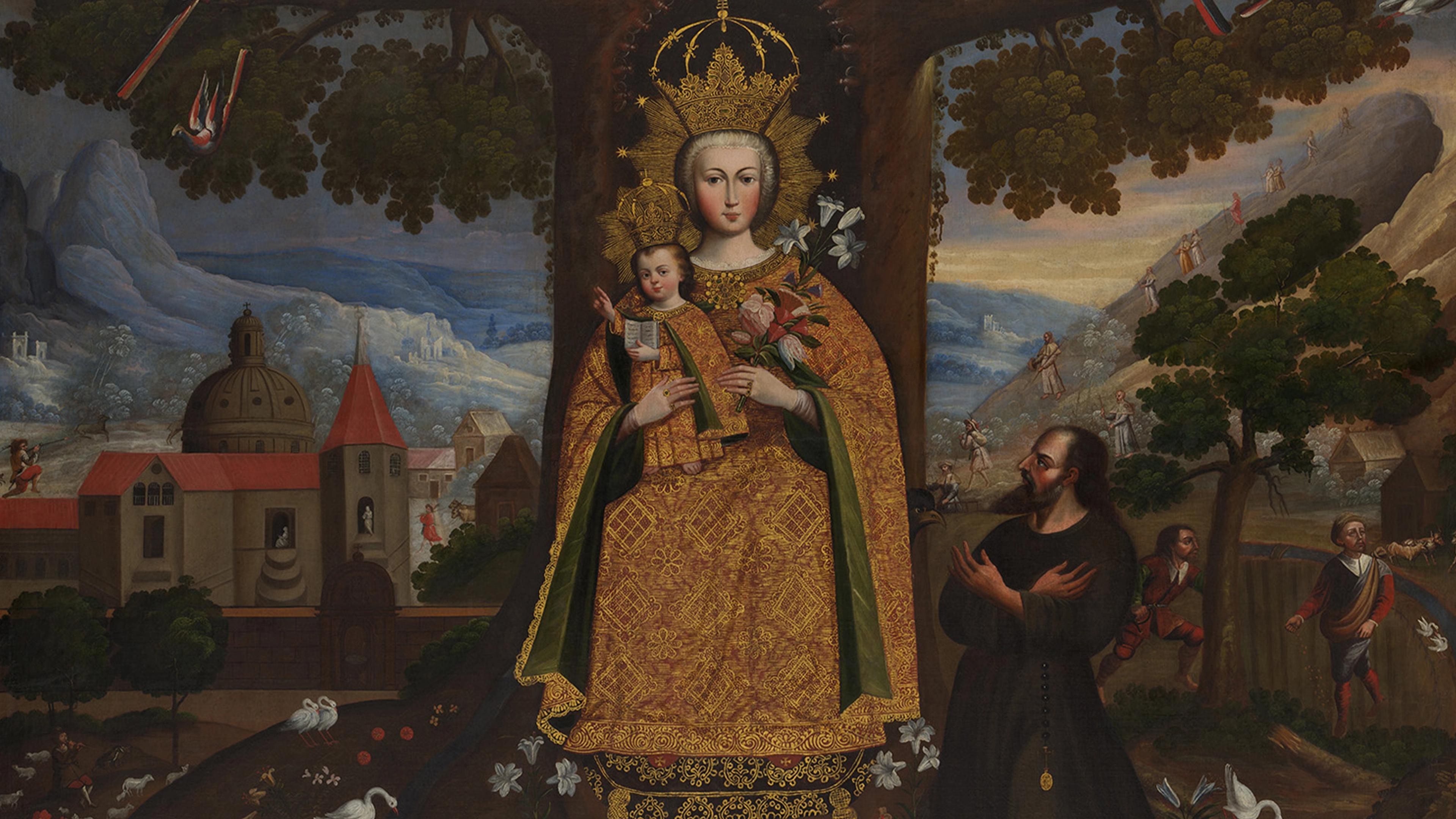
Unknown Cuzco Artist, Peru, second half of 18th Century. Our Lady of Valvanera, ca. 1770–80. Oil and gold on canvas, 80 1/16 × 95 7/8 in. (203.4 × 243.5 cm). The Metropolitan Museum of Art, New York, Gift of James Kung Wei Li, in memory of Ambassador and Mme Ti-Tsun Li, Republic of China, 2018 (2018.652.3)
This painting, done by an unknown Cuzco artist in Peru during the second half of the eighteenth century, depicts the miraculous discovery of the image of Our Lady of Valvanera by the repentant thief-turned-hermit Nuño Oñez, who kneels beside it in adoration. Hidden in the hollow of an oak tree since the Muslim invasion of Spain, the hermit saw the sacred image's location in a vision. The freshwater spring that flows from beneath the tree and the bees that frame the opening in the trunk signal the hidden location.
Although they are not part of the image’s miraculous origin story, the brightly colored tropical birds in the tree’s branches confirm the location’s sacredness. The church in the middle ground to the left of the Virgin is the monastery of Valvanera, where the miraculous image is venerated.
Crown of the Virgin of the Immaculate Conception, known as the Crown of the Andes
Gallery 626
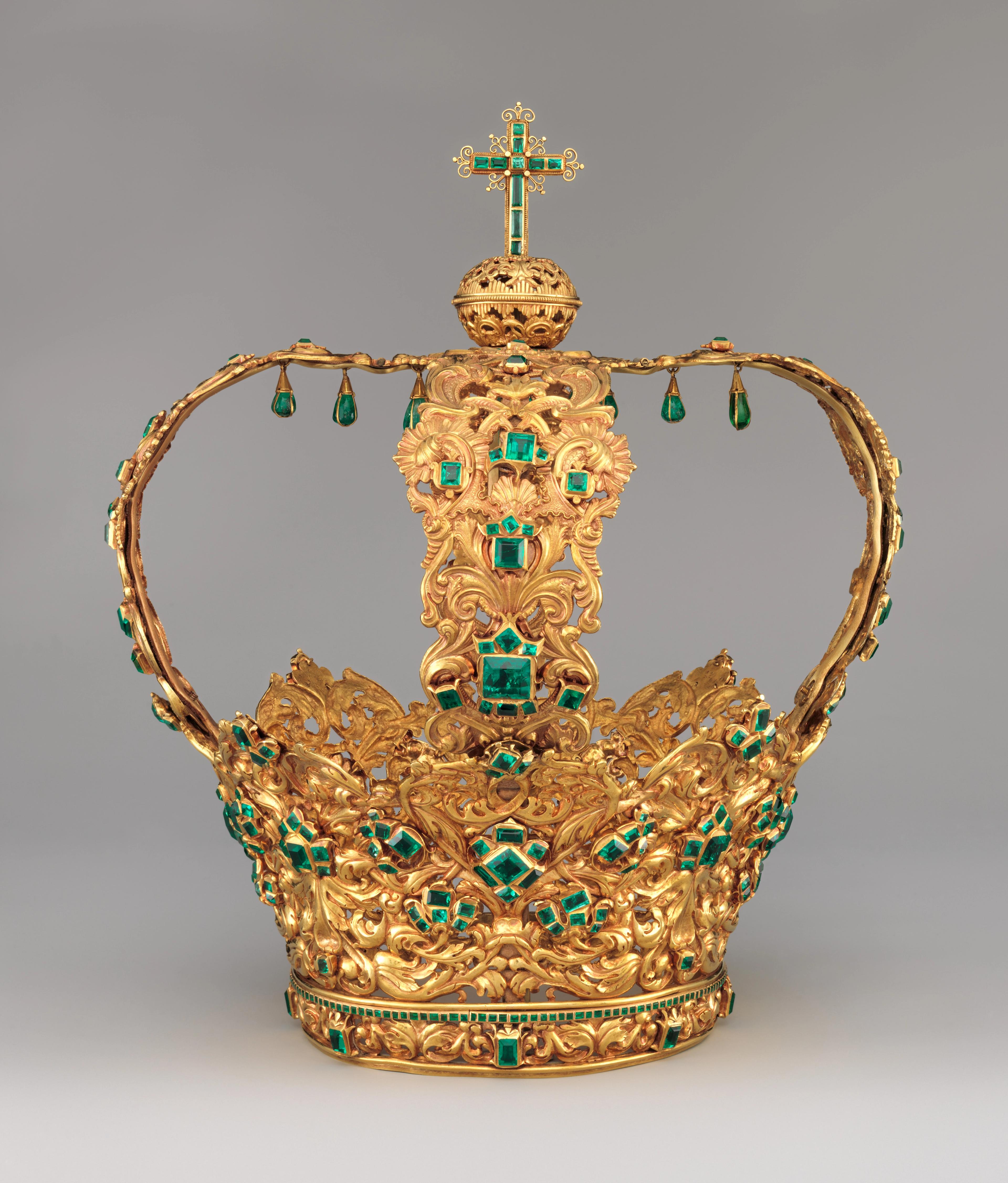
Crown of the Virgin of the Immaculate Conception, known as the Crown of the Andes, Ca. 1660 (diadem) and ca. 1770 (arches). Colombian; Popayán. Gold, repoussé and chased; emeralds, 13 1/2 in. (34.3 cm); body diameter: 13 1/4 in. (33.7 cm). The Metropolitan Museum of Art, New York, Purchase, Lila Acheson Wallace Gift, Acquisitions Fund and Mary Trumbull Adams Fund, 2015 (2015.437)
This crown was made to adorn a sacred image of the Virgin Mary venerated in the cathedral of Popayán, Colombia. A symbol of the Virgin’s divine queenship, the crown is encircled by golden vine work set with emerald clusters shaped like flowers, referencing her purity.
Although the practice was controversial, people often bestowed lavish gifts, including jewels and sumptuous garments, on sculptures of the Virgin Mary. To gain salvation, the faithful sought her intercession and worked to honor her and increase the splendor of her worship. At the same time, the crown represents one of the area’s most distinctive artistic achievements, whose wealth derived from mining gold and emeralds.
Finally, make your way to the Musical Instruments galleries for a closer look at how music is vital to Hispanic/Latine cultures.
Dancing in Colombia
Gallery 681
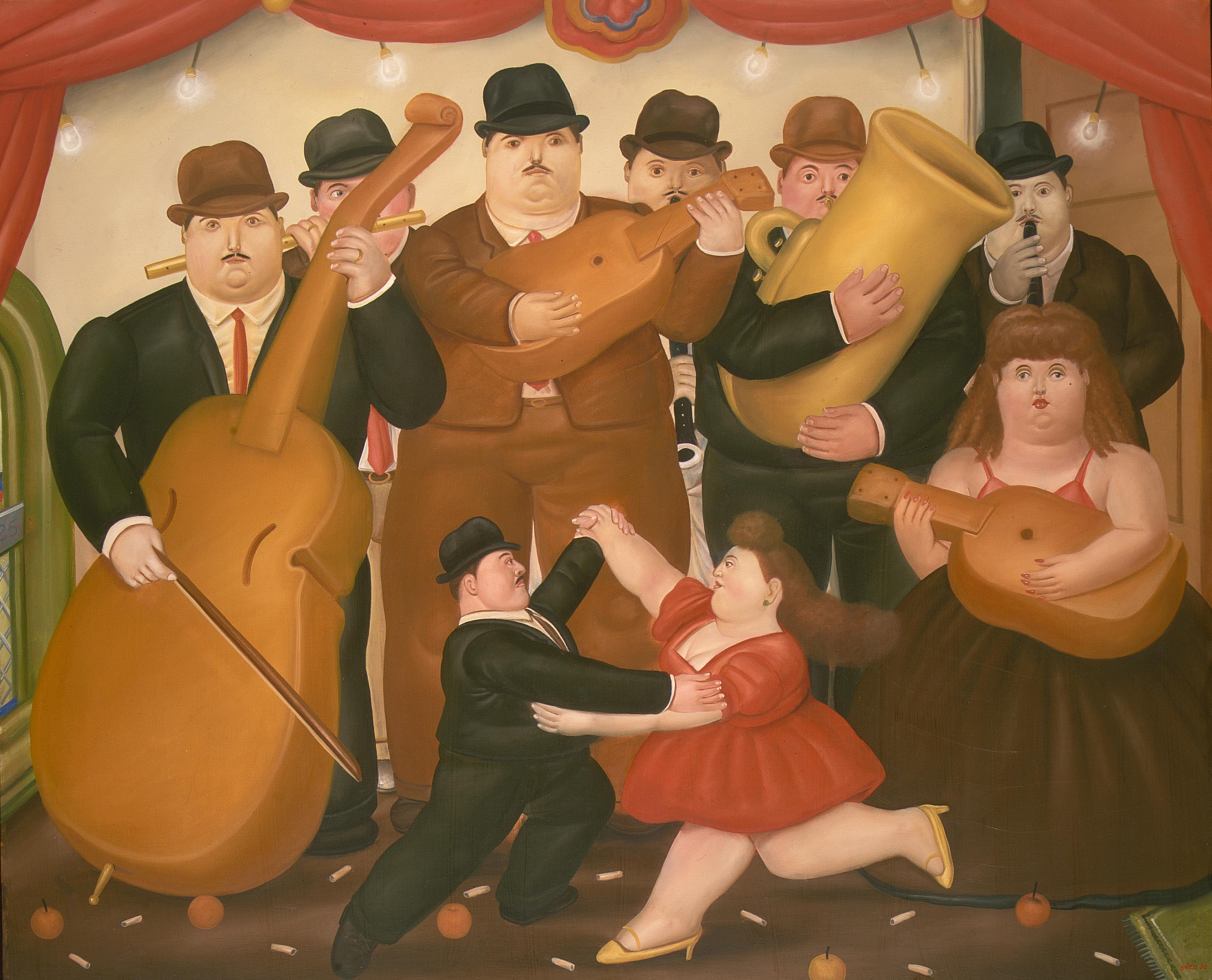
Fernando Botero (Colombian, 1932–2023). Dancing in Colombia, 1980. Oil on canvas, 74 × 91 in. (188 × 231.1 cm). The Metropolitan Museum of Art, New York, Anonymous Gift, 1983 (1983.251)
Born in Medellín, Colombia, Fernando Botero worked as an illustrator at sixteen for a local literary magazine. Though his interest in art began in Colombia, Botero developed his signature style in Europe: oversized, sometimes grotesque, figures and inflated still lifes that expand across the composition.
Dancing in Colombia depicts a lively café scene. While the musicians stare blankly and seem part of an inanimate still life arrangement, the inexplicably smaller couple dance before them with wild abandon, hair and legs flying.
Guitar
Gallery 681
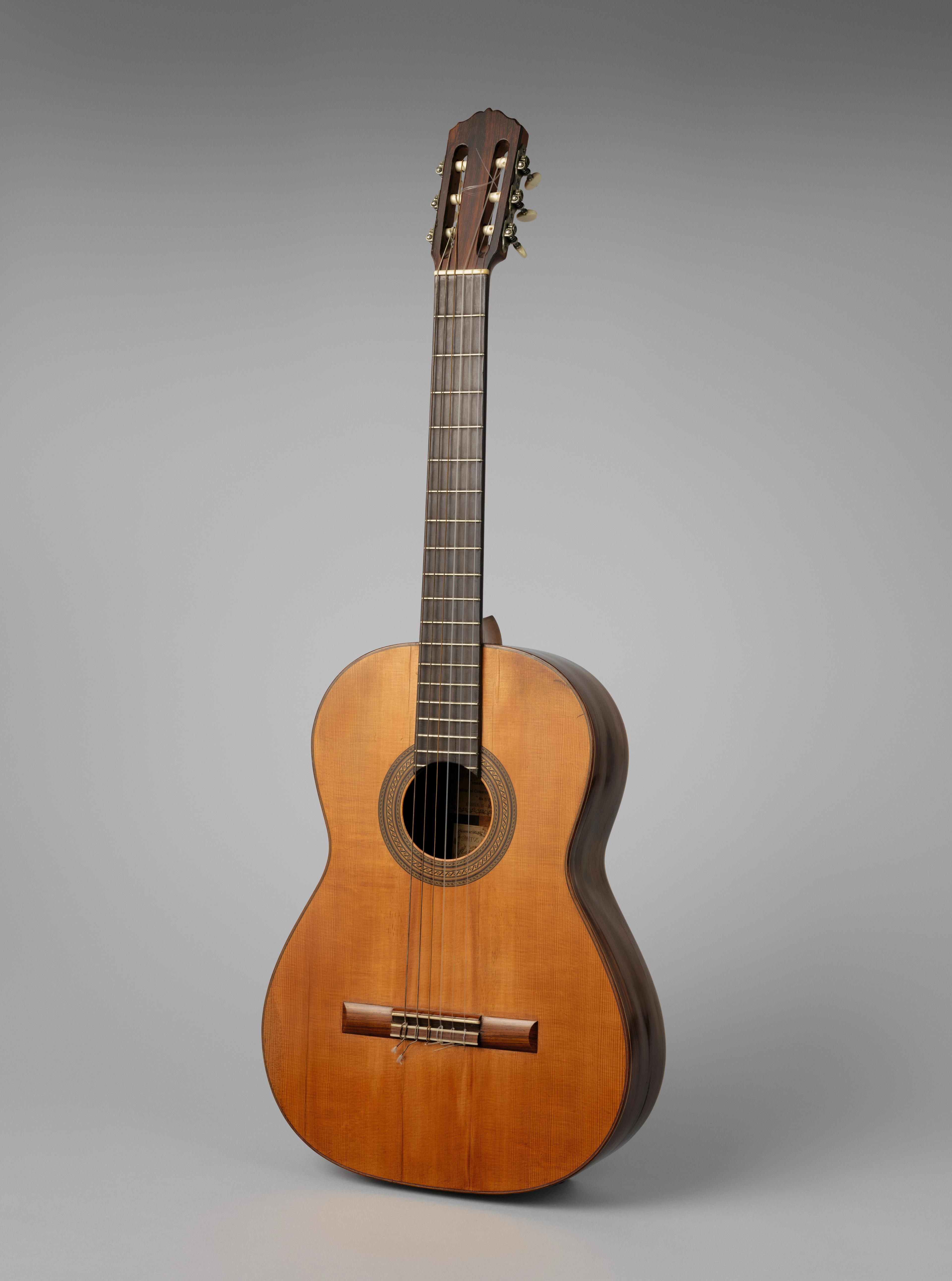
Manuel Ramírez (Spanish, 1864–1916) and Santos Hernández (Spanish, 1874–1943). Guitar, 1912. Spruce, rosewood, cedar, ebony, ivory or bone, height (Total): 38 in. (96.5 cm), width (At lower bouts): 14 1/2 (36.9 cm). The Metropolitan Museum of Art, New York, Gift of Emilita Segovia, Marquessa of Salobreña, 1986 (1986.353.2)
In 1913, the Spanish musician Andrés Segovia traveled to Madrid to give his debut concert at the Ateneo theater and visited Manuel Ramírez's workshop to rent a guitar. After hearing Segovia play, Ramírez gifted him a guitar from his shop on the condition that he carry and play it around the world for all to appreciate. Segovia used the instrument for nearly twenty-five years, performing around the world.
Visit our Membership Visit Guide for a full schedule of upcoming Membership events, tips for visiting, and much more. If you’re interested in joining a tour in person, you can find more information on our website here.
This tour was organized by volunteers in The Met's Education Department.


