騎乗騎士形アクアマニラ(水差し)
Artwork Details
- 題: 騎乗騎士形アクアマニラ(水差し)
- 月日: 1250年頃
- 地理: ニーダーザクセン地方、おそらくヒルデシェイム
- 文化: ドイツ
- 手法: 銅合金
- 寸法: 37.5 x 32 x 14.2 cm
- 提供者: アーウィン・アンテールマイヤー寄贈、1964年
- 受け入れ番号: 64.101.1492
- Curatorial Department: Medieval Art and The Cloisters
Audio
3010. Aquamanile in the Form of a Knight on Horseback
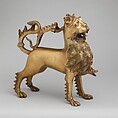
NANCY WU: This object, depicting a knight mounted on a horse, is known as an aquamanile. Aquamanilia are vessels used to wash hands. They come in many forms, often appearing as lions or imaginary beasts. Look closely at the knight’s helmet. It’s hinged, and can flip up, revealing how this brass pitcher was once filled. Water would have poured from the spout projecting from the horse’s head.
Many aquamanilia from the Middle Ages were used by priests during mass to wash their hands in symbolic purification. But given its subject matter, this one is more likely to have graced the dinner table of an aristocrat. It was made in the thirteenth century, a time when knights were respected members of the nobility. Indeed, the Middle Ages are often referred to now as the Age of Chivalry.The term ‘chivalry’ comes from the French word cheval, for horse.
PETER BARNET: The knight is probably one of the most familiar figures from the Middle Ages to visitors.
NANCY WU: Peter Barnet is Michel David-Weill Curator in Charge of the Department of Medieval Art and the Cloisters.
PETER BARNET: The knight is probably one of the most familiar figures from the Middle Ages to visitors and we see here a typical thirteenth century knight wearing an armor of mail covered by a sleeveless coat. This is typical armor of the period, including the helmet, although the knight as you see him here is missing two key elements that were most likely originally part of this object, and that is the shield and a long lance.
Listen to more about this artwork
More Artwork
Related Content

Research Resources
The Met provides unparalleled resources for research and welcomes an international community of students and scholars. The Met's Open Access API is where creators and researchers can connect to the The Met collection. Open Access data and public domain images are available for unrestricted commercial and noncommercial use without permission or fee.
To request images under copyright and other restrictions, please use this Image Request form.
Feedback
We continue to research and examine historical and cultural context for objects in The Met collection. If you have comments or questions about this object record, please contact us using the form below. The Museum looks forward to receiving your comments.
Content Notice
The Metropolitan Museum of Art presents over 5,000 years of art from around the world, and our online collection reflects ongoing work conducted over the course of our more than 150-year history. You may encounter objects or images that may be inappropriate for some viewers or information that may be outdated.