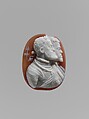
Камейный портрет императора Августа
Artwork Details
- Название: Камейный портрет императора Августа
- Период: Период правления императора Клавдия
- Дата: 41–54 г. н.э.
- Культура: Рим
- Материал: Сардоникс
- Размер: Выс. 3,8 см
- Благодарность: Приобретено, дарственный фонд им. Джозефа Пулитцера, 1942
- Номер объекта: 42.11.30
- Curatorial Department: Greek and Roman Art
Audio
1074. Sardonyx cameo portrait of the Emperor Augustus
These two cameos—made of semiprecious stone—are carved with portraits of the Emperor Augustus, who ruled Rome from 27 B.C. to 14 A.D.
Look at the cameo that depicts the Emperor crowned with a laurel wreath—a symbol of victory. Notice how he proudly turns his head toward the tip of his spear. Over his left shoulder, he wears an aegis, an extraordinary cape made of snake-like skin, and one that is usually associated with the Greek gods, Zeus and Athena. Look for the head of Medusa, on the right, and the head of a wind god, on the left, both emblazoned on the Emperor’s cape.
Augustus carefully cultivated his image as the divine ruler of the Roman Empire. Hundreds of statues, reliefs, coins, inscriptions, and cameos, like this one, overtly portray him with the attributes of a demigod.
On the other cameo, you’ll notice that the portrait of Augustus is supported by a double-headed Capricorn, a goat with two heads and a fish tail. Suetonius, a second-century Roman biographer, describes how the Emperor adopted this constellation as his own sign of good fortune. It frequently appears on the coins of Augustus.
Augustus promoted himself as the sole ruler and benefactor of the entire Roman world. His image of the Roman Emperor as a divinity, and of the Roman Empire as unending, was the legacy that he handed on to his successors, the Julio-Claudian dynasty.
More Artwork
Related Content
Research Resources
The Met provides unparalleled resources for research and welcomes an international community of students and scholars. The Met's Open Access API is where creators and researchers can connect to the The Met collection. Open Access data and public domain images are available for unrestricted commercial and noncommercial use without permission or fee.
To request images under copyright and other restrictions, please use this Image Request form.
Feedback
We continue to research and examine historical and cultural context for objects in The Met collection. If you have comments or questions about this object record, please contact us using the form below. The Museum looks forward to receiving your comments.
Content Notice
The Metropolitan Museum of Art presents over 5,000 years of art from around the world, and our online collection reflects ongoing work conducted over the course of our more than 150-year history. You may encounter objects or images that may be inappropriate for some viewers or information that may be outdated.