精饰福音书:第8r页,三博士来朝
Artwork Details
- 标题: 精饰福音书:第8r页,三博士来朝
- 创作日期: 十四世纪晚期至十五世纪早期
- 地域: 埃塞俄比亚,阿姆哈拉州
- 材料: 木头,牛皮纸,颜料
- 尺寸: 161⁄2 x 111⁄4 x 4英寸(41.9 x 28.6 x 10.2厘米)
- 来源信息: 罗杰斯基金,1998年
- 藏品编号: 1998.66
- Curatorial Department: The Michael C. Rockefeller Wing
Audio
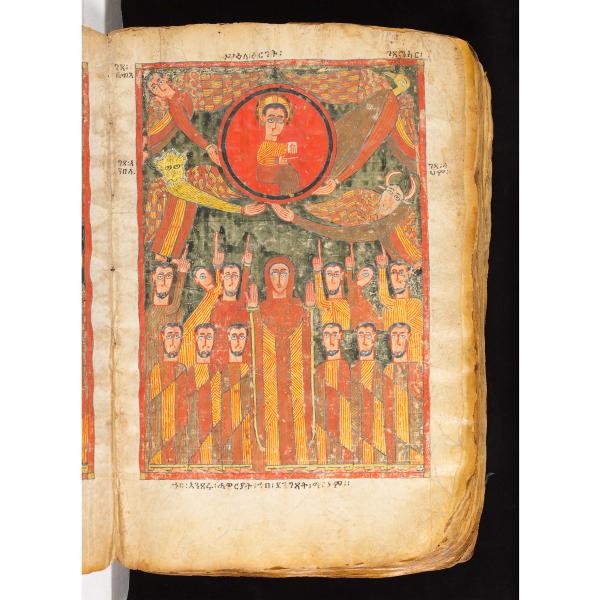
1525. Book of the Gospels, Northern Highlands artists
Maaza Mengiste
MAAZA MENGISTE: When I see this book, what I see is a centuries-old relationship between the written word and religion. These religious texts were the primary expression of writers in Ethiopia until more modern times.
My name is Maaza Mengiste. I was born in Ethiopia, and I am an Ethiopian/American writer.
Ethiopia has had a deep history of literature, of writings. It has been steeped in the written word as a way to preserve the memories of different empires, of different rulers.
ANGELIQUE KIDJO (NARRATOR): In the sixth century, Ethiopians started translating the gospel into Geʽez—one of the oldest written languages in the world, and which remain the language of the Ethiopian Orthodox Church.
MAAZA MENGISTE: This has been the way that religion was passed down. Priests could read this and could then provide interpretations of the Bible to their congregations. Writing in Ethiopia has been deeply, intricately connected with its religions, whether it's Arabic or whether it’s Geʽez or Amharic.
ANGELIQUE KIDJO: The tradition of illuminating, or artistically rendering the people and narratives from a religious text, also points to something beyond words.
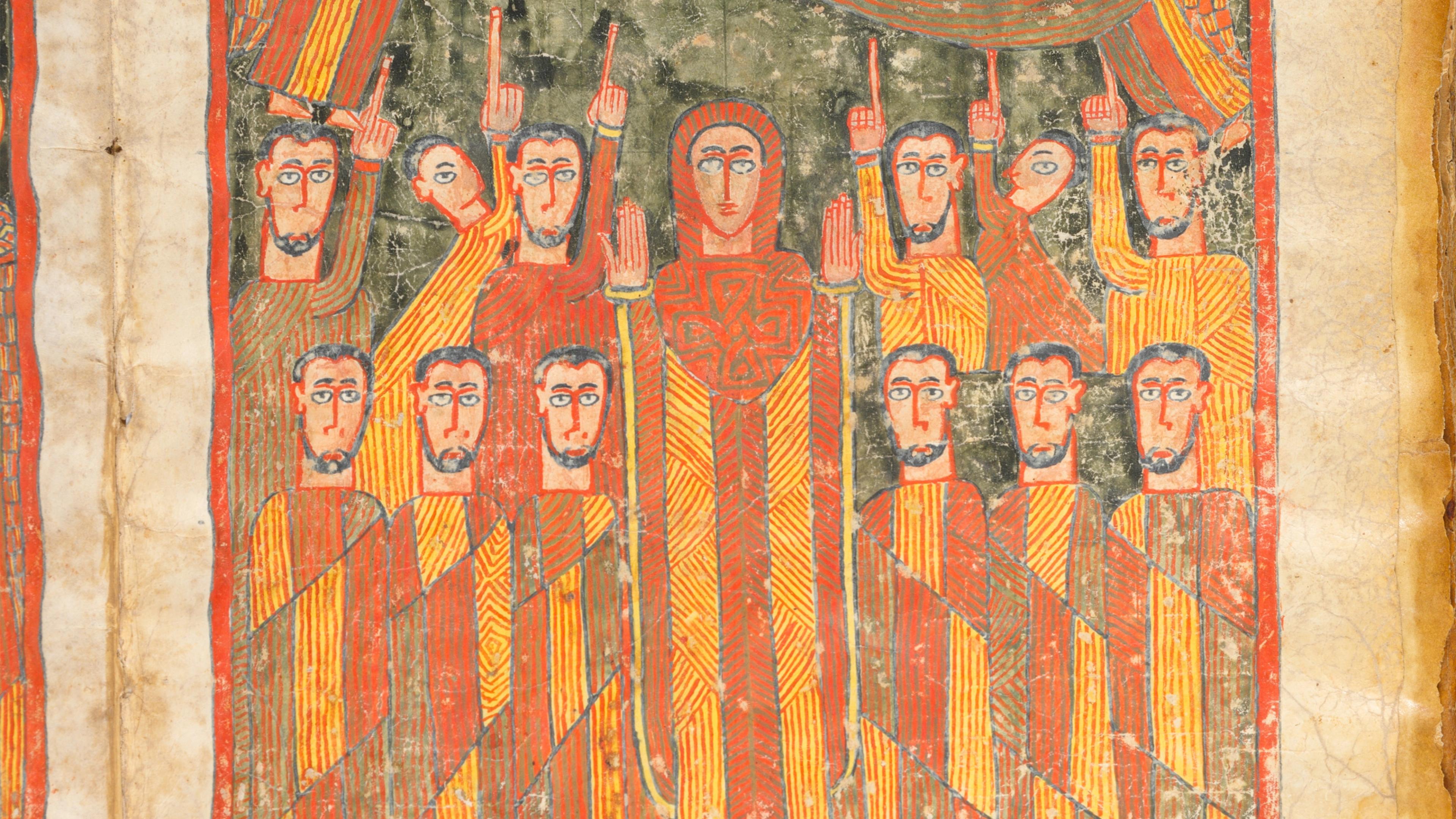
MAAZA MENGISTE: When I see the drawings next to the writings, it tells me that there is another layer that’s happening here. These drawings are seeking to affirm something that is outside of language. It’s a connection that has no real words, and I think that the intricateness of these drawings, the richness of the colors, the golds, the reds, they are, in a sense, trying to reflect visually what it might mean to have an epiphany.
Listen to more about this artwork
More Artwork
Related Content
 Free to download
Research Resources
The Met provides unparalleled resources for research and welcomes an international community of students and scholars. The Met's Open Access API is where creators and researchers can connect to the The Met collection. Open Access data and public domain images are available for unrestricted commercial and noncommercial use without permission or fee.
To request images under copyright and other restrictions, please use this Image Request form.
Feedback
We continue to research and examine historical and cultural context for objects in The Met collection. If you have comments or questions about this object record, please contact us using the form below. The Museum looks forward to receiving your comments.
Content Notice
The Metropolitan Museum of Art presents over 5,000 years of art from around the world, and our online collection reflects ongoing work conducted over the course of our more than 150-year history. You may encounter objects or images that may be inappropriate for some viewers or information that may be outdated.