Vaso canopo con coperchio
Artwork Details
- Titolo: Vaso canopo con coperchio
- Periodo: Nuovo Regno, XVIII dinastia, regno di Akhenaton
- Data: ca. 1352-1336 a.C.
- Area geografica: Tebe, Valle dei Re, Tomba KV 55
- Materiale e tecnica: Alabastro egizio, vetro blu, ossidiana, pietra non identificata
- Dimensioni: Alt. del coperchio 18,2 cm, diam. 16,3 cm, alt. del vaso 52,1 cm
- Crediti: Dono di Theodore M. Davis, 1907 (07.226.1); collezione Theodore M. Davis, lascito di Theodore M. Davis, 1915
- Numero d'inventario: 30.8.54
- Curatorial Department: Egyptian Art
Audio
3455. Canopic Jar with a Lid in the Shape of a Royal Woman's Head
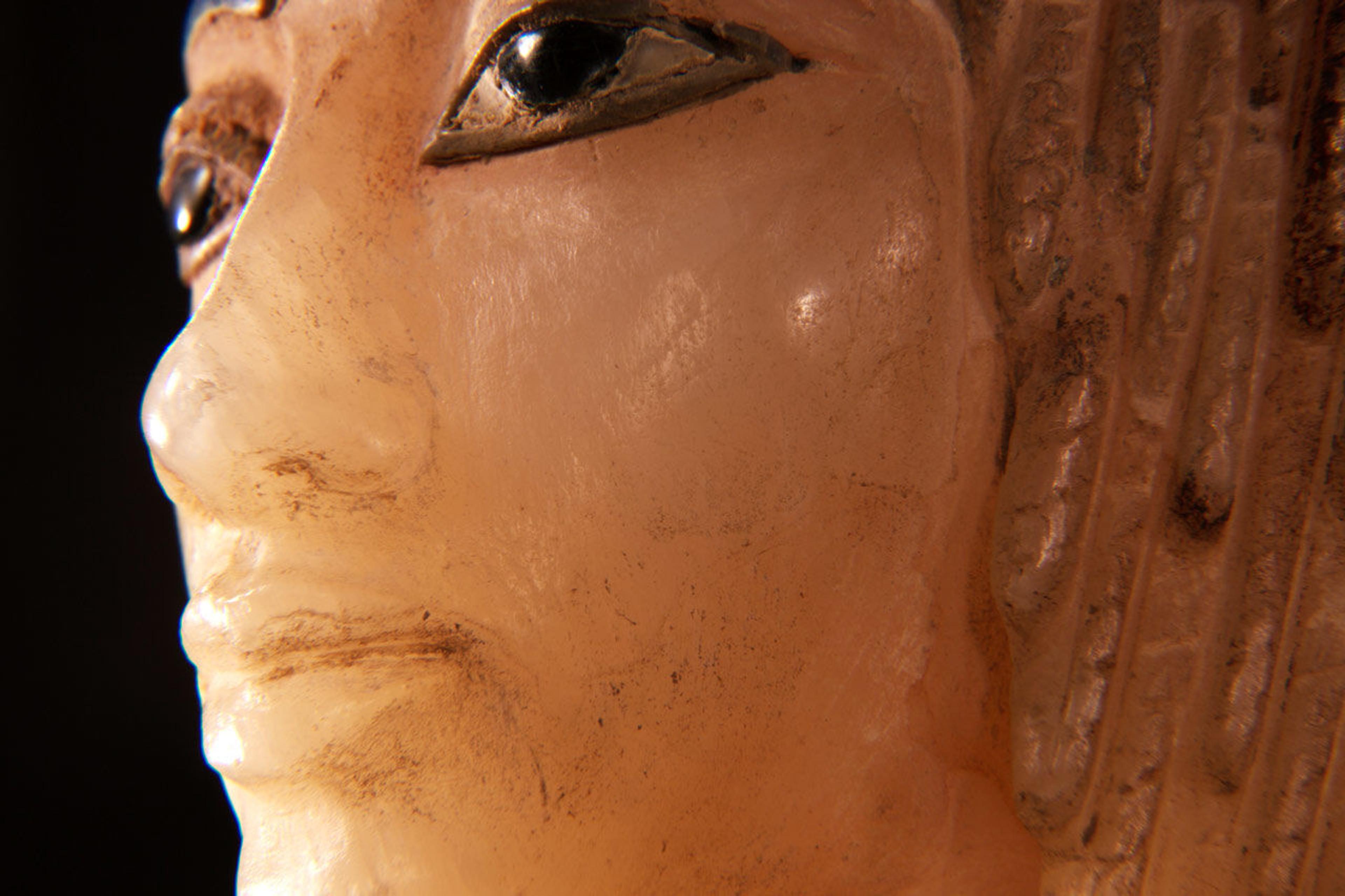
Egyptian sculptors always excelled in carving alabaster, and this is an unsurpassed masterpiece of the genre. The semi-translucent wig throws a subdued shadow on the slender neck. Its tiered sides and heavy top emphasize the slenderness and delicacy of the face. And the eyebrow- and eye-inlays of blue glass, gray stone, alabaster and obsidian add color to the honey and cream of the stone. The expression is dignified and alert, and the face has a youthful glow suffuses the face.
The vase comes from one of the most hotly debated archaeological finds in all of Egypt: Tomb 55 in the Valley of the Kings. When it was discovered, the tomb contained a jumble of remains from two royal burials that seem to have found a final repository in Tomb 55 after the turmoils at the end of the Amarna period. This vessel is one of four canopic jars—or containers for the viscera of a mummy—from Tomb 55.
The much discussed question is: whose image does the bust-shaped lid reproduce? When Egyptologists deciphered the erased inscription on the jar itself, they identified the original owner of the vessel bodies as the minor queen Kiya, the secondary wife of Akhenaten. Kiya may have been of foreign origin. According to some scholars, she was the mother of Tutankhamun. But even if the jar originally belonged to Kiya, the lid might not have. Look how awkwardly it sits on the jar. It’s possible that the lid was made for a different vessel, whose owner we do not know. At one time or another, scholars to identified the head on the lid as almost every player in the Amarna drama. It’s even possible that the lid was used for several of these people consecutively. But whomever it represents, the image is a singular work of art.
More Artwork
Press the down key to skip to the last item.

Related Content

 Free to download
Research Resources
The Met provides unparalleled resources for research and welcomes an international community of students and scholars. The Met's Open Access API is where creators and researchers can connect to the The Met collection. Open Access data and public domain images are available for unrestricted commercial and noncommercial use without permission or fee.
To request images under copyright and other restrictions, please use this Image Request form.
Feedback
We continue to research and examine historical and cultural context for objects in The Met collection. If you have comments or questions about this object record, please contact us using the form below. The Museum looks forward to receiving your comments.