English
DonateMembershipTickets

Noh Costume (Chōken) with Paulownia

18th century
Not on view
Probably originally a reference to a type of silk, chōken (literally “long silk”) were garments worn during the Muromachi period (1392–1573) by young boys of elite samurai families. High-ranking samurai gifted Noh actors with elegant chōken hitatare (long-sleeved jacket paired with a trouser-skirt) to use as Noh costumes; gradually the term came to mean Noh robes. Typically, chōken are made of silk gauze patterned with gold supplementary wefts. This robe is decorated with two sizes of paulownia flower in gold, white, peach, orange, and green on a purple gauze ground. Chōken were often used in dances by male actors playing elegant female characters, or as costumes for gentle male characters.

Artwork Details

Object Information
  • 紫地桐模様長絹
  • Title: Noh Costume (Chōken) with Paulownia
  • Period: Edo period (1615–1868)
  • Date: 18th century
  • Culture: Japan
  • Medium: Silk gauze (ro) brocaded with silk and metallic thread
  • Dimensions: 44 1/4 x 80 in. (112.4 x 203.2 cm)
  • Classification: Costumes
  • Credit Line: Gift of Mrs. Howard Mansfield, 1950
  • Object Number: 50.110.2
  • Curatorial Department: Asian Art
More Artwork
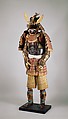
Armor (<i>Gusoku</i>), Saotome Ietada  Japanese, Iron, lacquer, silk, gilt copper, Japanese
Armorer Helmet bowl signed Saotome Ietada
Armorer Breastplate inscribed inside, Myōchin Munesuke
16th and 18th centuries
Unlined Summer Kimono (Hito-e) with Crickets, Grasshoppers, Cricket Cages, and Pampas Grass

, Gauze-weave silk with paste-resist dyeing, hand-painted details, and gold thread, Japan
Japan
early 20th century
Helmet (<i>Zukinnari Kabuto</i>), Iron, lacquer, Japanese
Japanese
16th century
Unlined Summer Kimono (Hito-e) with Landscapes, Seasonal Flowers, and Poem, Gauze-weave silk with paste-resist dyeing, silk embroidery, and couched gold thread, Japan
Japan
second half 18th century
Koto (箏), Metalwork by Goto Teijo, 9th generation Goto master, Japan  Japanese, Various woods, ivory and tortoiseshell inlays, gold and silver inlays, metalwork, cloth, laquer, paper,, Japanese
Metalwork by Goto Teijo, 9th generation Goto master, Japan
Workshop of Gotō Yūjō
early 17th century

Research Resources

The Met provides unparalleled resources for research and welcomes an international community of students and scholars. The Met's Open Access API is where creators and researchers can connect to the The Met collection. Open Access data and public domain images are available for unrestricted commercial and noncommercial use without permission or fee.

To request images under copyright and other restrictions, please use this Image Request form.

Feedback

We continue to research and examine historical and cultural context for objects in The Met collection. If you have comments or questions about this object record, please contact us using the form below. The Museum looks forward to receiving your comments.

Send feedback

Content Notice

The Metropolitan Museum of Art presents over 5,000 years of art from around the world, and our online collection reflects ongoing work conducted over the course of our more than 150-year history. You may encounter objects or images that may be inappropriate for some viewers or information that may be outdated.