A sala Varengeville
Artwork Details
- Título: A sala Varengeville
- Data: ca. 1736–52 (com adições posteriores)
- Geografia: Paris
- Dimensões: 5,58 x 7,07 x 12,36 m
- Linha de créditos: Compra, doação do Sr. Charles Wrightsman e Sra., 1963
- Número de acesso: 63.228.1
- Curatorial Department: European Sculpture and Decorative Arts
Audio
2275. Overview: Varengeville Room, Part 1
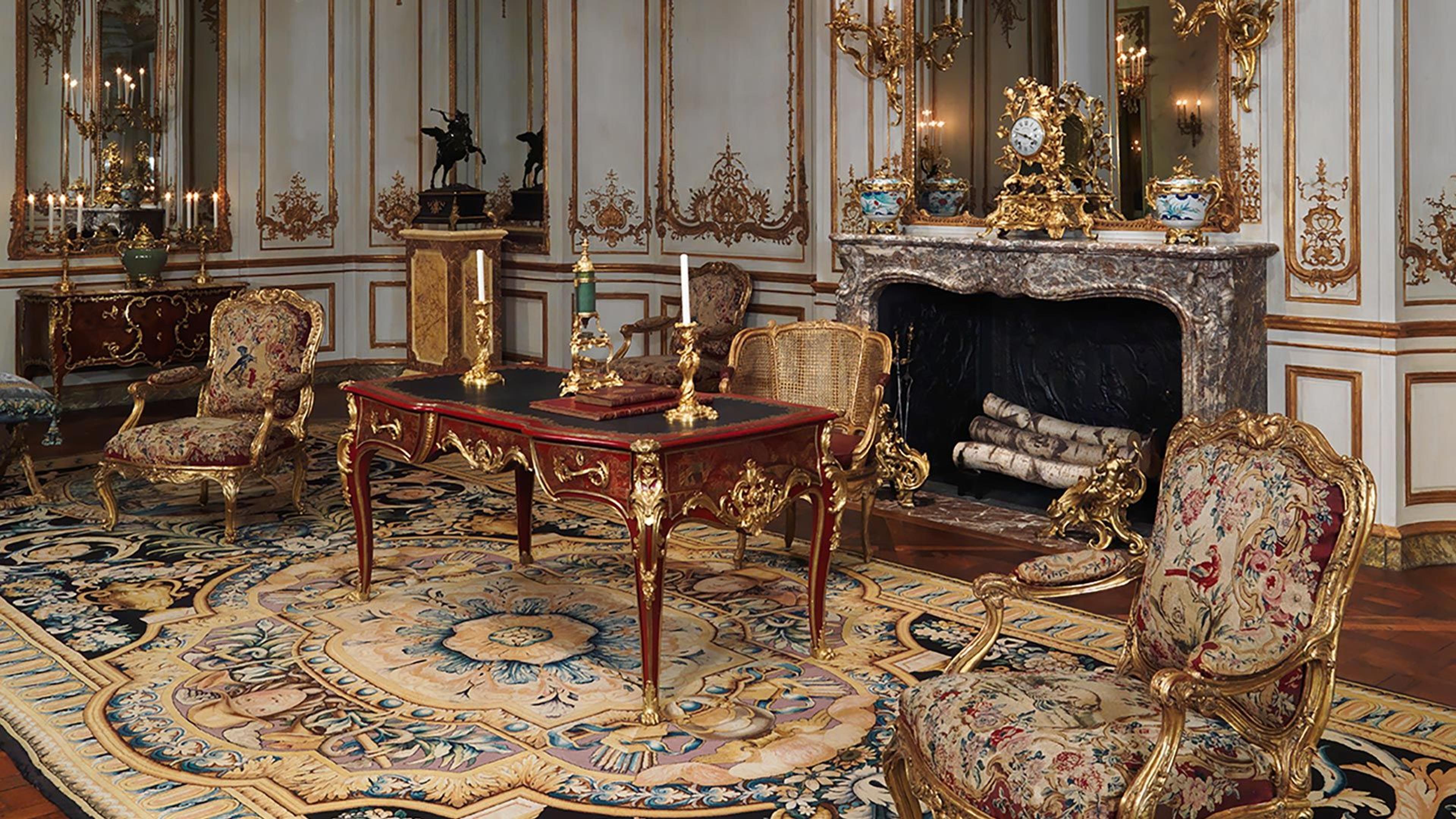
NARRATOR: This palatial reception room epitomizes the start of the glorious era of French Rococo. This ornate style of great delicacy and refinement flourished in the mid-eighteenth century, while Louis XV was King. And some of the Museum’s most extraordinary objects from his reign are displayed here.
This opulent painted and gilded paneling once decorated the walls of the Hôtel de Varengeville, a grand townhouse in Paris. Its exuberant high-relief carving typifies early Rococo décor. The term derives from rocaille and coquillage, or decoration with irregularly shaped stones and shells. And here are such characteristic motifs as swirling S-scrolls, palmettes, and sprays of foliage. Curator Danïelle Kisluk-Grosheide.
DANIËLLE KISLUK-GROSHEIDE: Particularly noteworthy are the birds on either side of the top of the mirrors and at the top of the panels, with their necks sticking out quite three-dimensional, away from the background.
NARRATOR: Mirrors—a highly expensive commodity—punctuate the white-and-gold paneling. They serve to reflect limited light, as well as expand the sense of objects and space. Not everyone was smitten with Rococo interiors. To hear more, press play.
Listen to more about this artwork
More Artwork
Related Content
Research Resources
The Met provides unparalleled resources for research and welcomes an international community of students and scholars. The Met's Open Access API is where creators and researchers can connect to the The Met collection. Open Access data and public domain images are available for unrestricted commercial and noncommercial use without permission or fee.
To request images under copyright and other restrictions, please use this Image Request form.
Feedback
We continue to research and examine historical and cultural context for objects in The Met collection. If you have comments or questions about this object record, please contact us using the form below. The Museum looks forward to receiving your comments.
Content Notice
The Metropolitan Museum of Art presents over 5,000 years of art from around the world, and our online collection reflects ongoing work conducted over the course of our more than 150-year history. You may encounter objects or images that may be inappropriate for some viewers or information that may be outdated.