Фрагмент напольной мозаики с персонификацией Ктизис
Artwork Details
- Название: Фрагмент напольной мозаики с персонификацией Ктизис
- Дата: около 500–550 гг., современная реставрация
- Культура: Византия
- Материал: Мрамор, стекло
- Размер: 151,1 x 199,7 x 2,5 см
- Благодарность: Фонд Харриса Брисбэйна Дика и фонд Флетчера, 1998 (1998.69); приобретение, дар Лилы Эйчсон Уоллес, фонд Доджа и фонд Роджерса, 1999
- Номер объекта: 1999.99
- Curatorial Department: Medieval Art and The Cloisters
Audio
2825. Fragment of a Floor Mosaic with a Personifixation of Ktisis
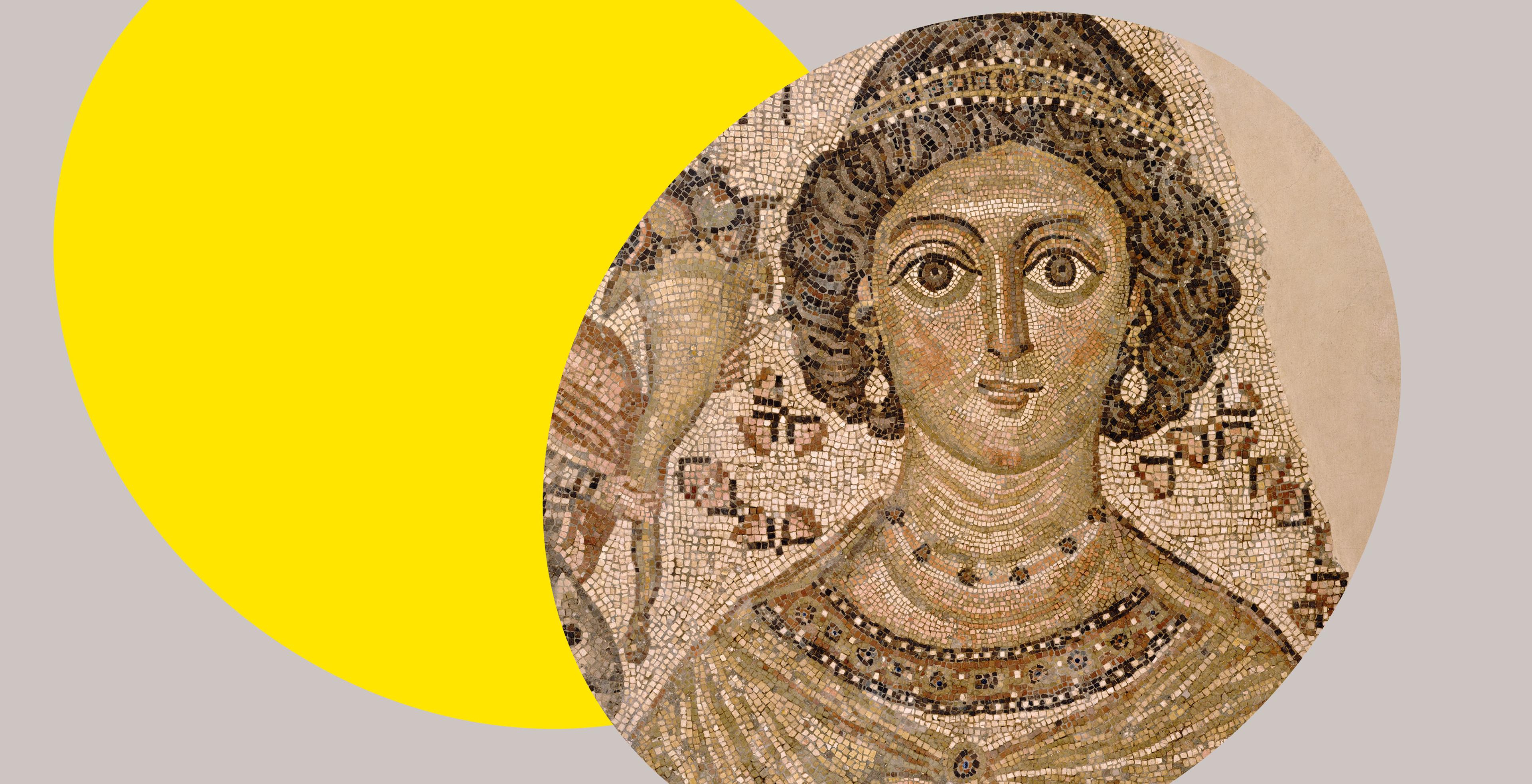
This restored mosaic represents the type of decoration found on floors of large buildings in the mid-sixth century, the peak of the early Byzantine Empire.
A monumental bust shows a stunningly bejeweled woman with large, inviting eyes. She is Ktisis, the personification of the pre-Christian idea of the generous act of foundation, or providing money for a building.
To the left of Ktisis, there’s a man holding a large cornucopia filled with fruits and leaves. He is identified by the Greek word Kaloi, meaning good or beautiful, and serves as a proclamation of the donor’s generosity. These two figures were part of a larger program, where another man would have appeared to the right of Ktisis, probably with the Greek word Kaipoi, so that the full inscription would read as good wishes.
Floor mosaics originated in the Greek and Roman world. Sometimes rugs were woven in the same patterns to cover the floors in cold weather.
Listen to more about this artwork
More Artwork
Related Content

Research Resources
The Met provides unparalleled resources for research and welcomes an international community of students and scholars. The Met's Open Access API is where creators and researchers can connect to the The Met collection. Open Access data and public domain images are available for unrestricted commercial and noncommercial use without permission or fee.
To request images under copyright and other restrictions, please use this Image Request form.
Feedback
We continue to research and examine historical and cultural context for objects in The Met collection. If you have comments or questions about this object record, please contact us using the form below. The Museum looks forward to receiving your comments.
Content Notice
The Metropolitan Museum of Art presents over 5,000 years of art from around the world, and our online collection reflects ongoing work conducted over the course of our more than 150-year history. You may encounter objects or images that may be inappropriate for some viewers or information that may be outdated.