Due to the predicted impact of the blizzard, The Met Fifth Avenue and The Met Cloisters will be closed to the public Monday, February 23.

Search the collection

Filter By

Object Type / Material
Geographic Location
Department
Date
Show Only:
  • As part of the Met's Open Access policy, you can freely copy, modify and distribute this image, even for commercial purposes.
    APIPublic domain data for this object can also be accessed using the Met's Open Access API
  • Objects with changed or unknown ownership in continental Europe between 1933-1945. Learn more
Showing 168 results for aquamanile
Sort by:
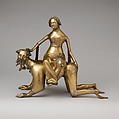
Aquamanile in the Form of Aristotle and Phyllis, Bronze; Quaternary copper alloy (approx. 72% copper, approx. 17% zinc,<br/>approx. 6% lead, approx. 3% tin)., South Netherlandish
South Netherlandish
late 14th or early 15th century
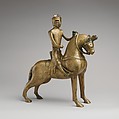
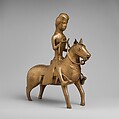
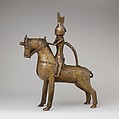
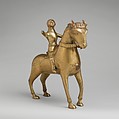
Aquamanile in the Form of a Mounted Knight, Copper alloy, German
German
ca. 1250
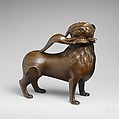
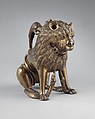
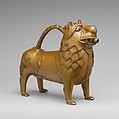
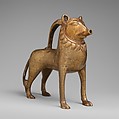
Aquamanile in the Form of a Lion, Copper alloy, German
German
ca. 1400
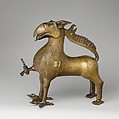
Aquamanile in the Form of a Griffin, Bronze; Ternary copper alloy with a very high content of zinc (approx. 74%<br/>copper, approx. 22% zinc, approx. 2% lead) with natural patina, hollow cast., German, Nuremberg
German, Nuremberg
ca. 1425–50
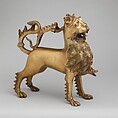
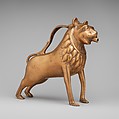
Aquamanile in the Form of a Lion, Copper alloy, North German
North German
ca. 1200
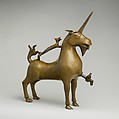
Aquamanile in the Form of a Unicorn, Copper alloy, German
German
ca. 1425–50
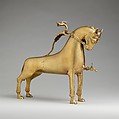
Aquamanile in the Form of a Horse, Copper alloy, German
German
ca. 1400
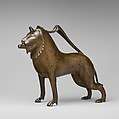
Aquamanile in the Form of a Lion, Bronze; binary copper alloy (approx. 88% copper, approx. 8% tin) hollow cast,<br/>chased, engraved, and gilded., North German, Lubeck (?)
North German, Lubeck (?)
ca. 1230 or early nineteenth century
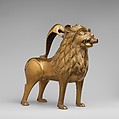
Aquamanile in the Form of a Lion, Copper alloy with inlaid glass, North German
North German
ca. 1200
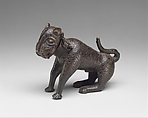
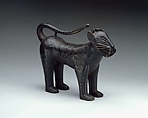
Leopard Aquamanile, Edo artist, Brass, Edo
Edo artist
16th–19th century
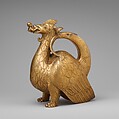
Aquamanile in the Form of a Dragon, Copper alloy, North German
North German
ca. 1200
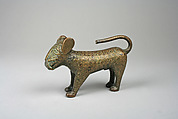
Leopard Aquamanile, Edo artist, Brass, Edo
Edo artist
16th–19th century
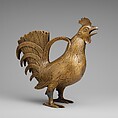
Aquamanile in the Form of a Rooster, Copper alloy, German
German
13th century
Aquamanile in the Form of a Lion, Copper alloy, glass inlays, North German
North German
12th century
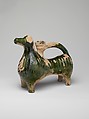
Aquamanile in the Form of a Ram, Earthenware, green glaze, British
British
ca. 1250–1350
Aquamanile in the Form of Samson and
the Lion, Bronze; quaternary copper alloy (approx. 78% copper, approx. 10% zinc, approx. 6% tin, approx. 5% lead) with natural patina. Remnants of the iron armature are in the lion’s legs and the figure of Samson., Northern European (?), possibly German
Northern European (?), possibly German
ca. 1380–1400
Leopard Aquamanile, Ìgùn Ẹ́rọ̀nwwọ̀n (brass-casting guild) artists, Brass, Edo peoples
Ìgùn Ẹ́rọ̀nwwọ̀n (brass-casting guild) artists
16th–19th century
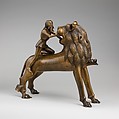
Aquamanile in the Form of a Falconer on Horseback, Copper alloy, North German
North German
13th century
Aquamanile in the Form of a Soldier on Horseback, Copper alloy, German
German
early 15th century
Aquamanile in the Form of a Knight on
Horseback, Bronze; Quaternary copper alloy with a high content of zinc (approx. 73% copper, approx. 15% zinc, approx. 7% lead, approx. 3% tin) with natural patina, hollow cast; remnants of the clay core<br/>and iron armature in the legs, German, Lower Saxony (?)
German, Lower Saxony (?)
ca. 1350
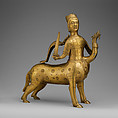
Aquamanile in the Form of a Crowned Centaur Fighting a Dragon, Copper alloy, German
German
1200–1225
Aquamanile in the Form of a Lion, Copper alloy, German
German
14th century
Aquamanile in the Form of a Lion, Copper alloy, German
German
late 13th century–early 14th century
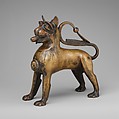
Aquamanile in the Form of a Horse, Copper alloy, German
German
first half 15th century
Aquamanile in the Form of a Lion, Copper alloy, German
German
late 19th century–early 20th century (15th century style)
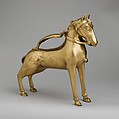
Aquamanile in the Form of a Horse, Copper alloy, German
German
first half 15th century
Aquamanile in the Form of a Lion, Copper alloy, German
German
late 13th century–early 14th century
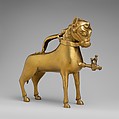
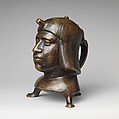
Aquamanile in the Form of a Human Head, Bronze; Ternary copper alloy with a very high percentage of zinc (approx. 68% copper,<br/>approx. 26% zinc, approx. 4% tin), covered with a thin black lacquer patina; traces of cinnabar have been detected on the interior and exterior of the vessel., German or French, Paris (in fourteenth-century Hildesheim style)
German or French, Paris (in fourteenth-century Hildesheim style)
last quarter 19th century
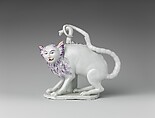
Manticore, Vienna, Hard-paste porcelain, Austrian, Vienna
Vienna
Claudius Innocentius Du Paquier period
ca. 1735
Sir David Young Cameron
1913
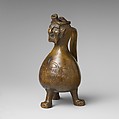
Aquamanile in the Form of a Gourd with a
Human Head, Bronze; quaternary copper alloy (62.8% copper, 18.3% lead; 11.9% zinc, 7% tin); with a thin layer of dark patina., German
German
19th century
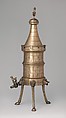
Turret Laver, Bronze, German
German
15th century
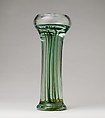
Aquamarine Water Lily Vase, Louis C. Tiffany  American, Glass, American
Louis C. Tiffany
Tiffany Furnaces
ca. 1913
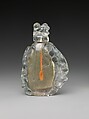
Snuff bottle with squirrel and grapes, Aquamarine, China
China
18th century
Seal, Aquamarine, China
China
19th century
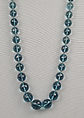
Necklace, Aquamarine, European
European
19th–20th century
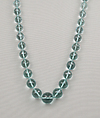
Necklace, Aquamarine, European
European
19th–20th century
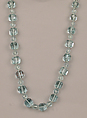
Necklace, Aquamarine, European
European
19th–20th century
Necklace, Aquamarine, European
European
19th–20th century
Head of a Roman lady, Aquamarine, Italian
Italian
late 18th century