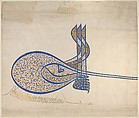
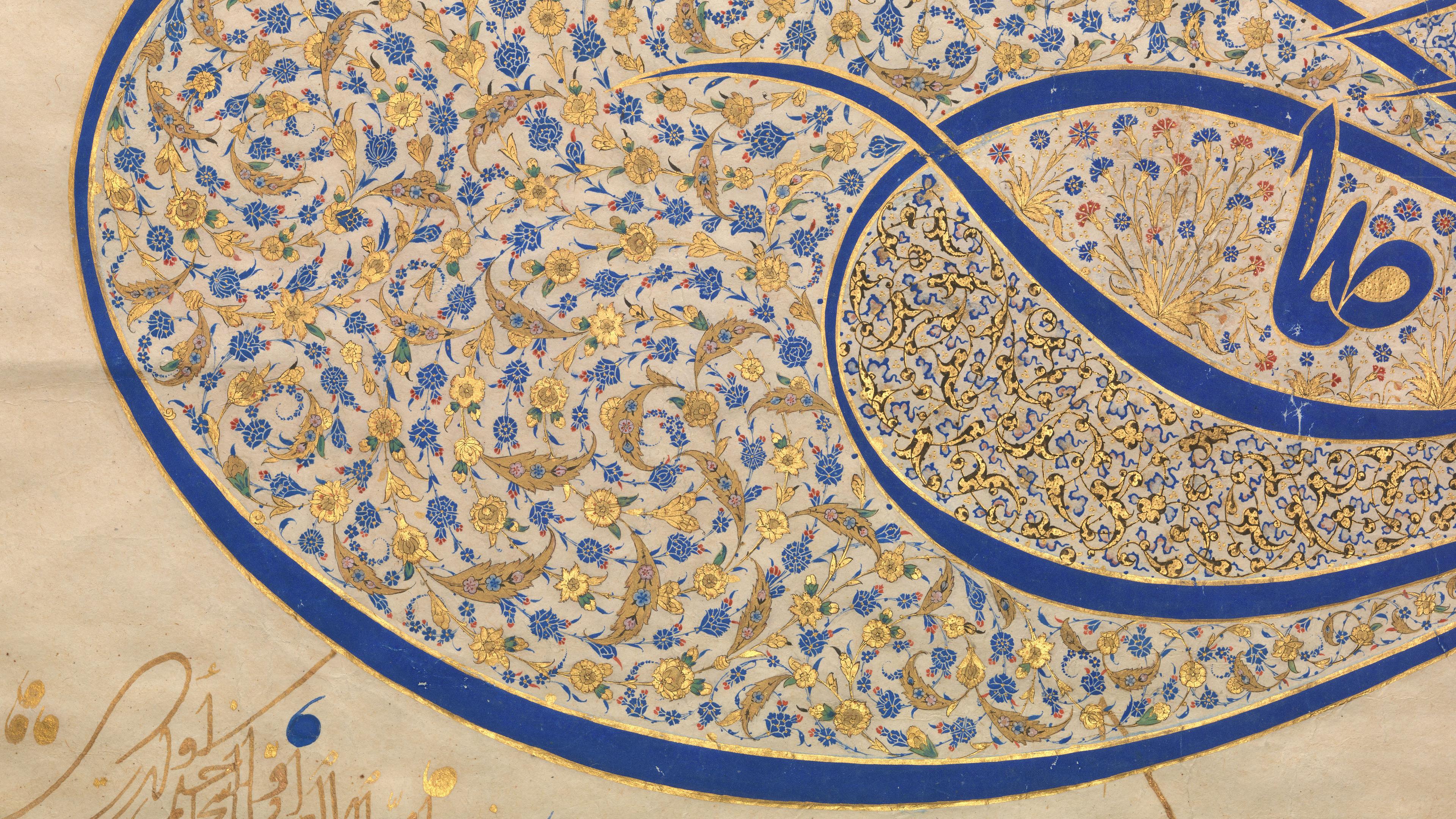
Tughra del sultán Solimán el Magnífico
Artwork Details
- Título: Tughra del sultán Solimán el Magnífico
- Fecha: ca. 1555–1560
- Geografía: Turquía, Estambul
- Material: Tinta, acuarela opaca, oro sobre papel
- Dimensiones: 52,1 x 64,5 cm
- Crédito: Fondo Rogers, 1938
- Número de inventario: 38.149.1
- Curatorial Department: Islamic Art
Audio
906. Kids: Tughra (Official Signature) of Sultan Süleiman the Magnificent (r. 1520-66)
NAVINA HAIDAR: Believe it or not, the large painted design in blue and gold is a signature. It was the official signature – or the ‘tughra’ – of a mighty ruler: Sultan Sulaiman. So where’s Sulaiman’s name, exactly? Look at the part at the bottom, in the center. Those gracefully woven lines form Arabic letters, spelling out “Sulaiman, son of Salim Khan, ever victorious.” You’ll see more writing to the side, in gold. This gives more of the Sultan’s official titles, and commands that his orders be obeyed. Sulaiman was such an important ruler, and ruled over such a huge empire for such a long time… that today he’s known as “Sultan Sulaiman the Magnificent”. But imagine Sulaiman having to paint this design, every time he signed his name! Where’d he find the time to decorate the open spaces with all those swirling leaves and flowers? Actually, he didn’t. The sultan paid an artist to write his official decrees on paper in beautiful calligraphy, and to paint his tughra at the top.
More Artwork
Related Content
Research Resources
The Met provides unparalleled resources for research and welcomes an international community of students and scholars. The Met's Open Access API is where creators and researchers can connect to the The Met collection. Open Access data and public domain images are available for unrestricted commercial and noncommercial use without permission or fee.
To request images under copyright and other restrictions, please use this Image Request form.
Feedback
We continue to research and examine historical and cultural context for objects in The Met collection. If you have comments or questions about this object record, please contact us using the form below. The Museum looks forward to receiving your comments.
Content Notice
The Metropolitan Museum of Art presents over 5,000 years of art from around the world, and our online collection reflects ongoing work conducted over the course of our more than 150-year history. You may encounter objects or images that may be inappropriate for some viewers or information that may be outdated.